
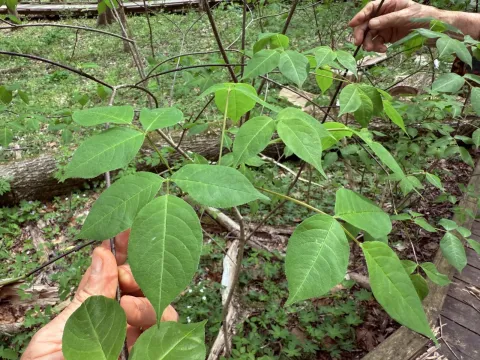
American bladdernut
Staphylea trifolia
The American bladdernut (Staphylea trifolia) is a deciduous shrub belonging to the Staphyleaceae family. Native to the woodlands of North America, it is prized in landscaping for its unique aesthetic, characterized by trifoliate leaves and distinctive, bladder-like seed capsules that persist well into the season.
What the section contains
American bladdernut
Botanically, the plant features white, bell-shaped flowers arranged in drooping panicles. Its growth habit is typically shrubby, although it can reach the size of a small tree under favorable conditions. The plant is valued for its ability to add texture and architectural interest to diverse garden settings.
Successful cultivation requires soil that is rich in organic matter, moist, and well-drained. While it adapts to a variety of conditions, it performs best in sheltered locations that provide protection from drying winds and harsh midday sun, making it an excellent choice for woodland gardens.
Cultural practices include consistent watering during the establishment phase and supplemental irrigation during drought periods. Because of its native woodland origin, the plant appreciates a layer of mulch in the root zone to conserve soil moisture and replicate the natural forest floor environment.
Hardiness is one of the key strengths of Staphylea trifolia, as it tolerates cold climates effectively. Regular pruning to remove crossing or dead branches helps maintain the plant's structural integrity and encourages more prolific flowering in the subsequent season.
The American bladdernut is generally a low-maintenance plant with few significant health issues. However, poor air circulation in dense plantings can predispose the foliage to powdery mildew, especially during humid summer months. Maintaining proper spacing is essential to mitigate this risk.
Pests such as aphids or spider mites may occasionally appear on young foliage. Integrated pest management strategies, including the monitoring of natural predators like ladybugs, often suffice to keep populations in check without the need for extensive chemical intervention.
Root health is crucial for this species; therefore, avoiding site waterlogging is paramount to prevent root rot. If the soil is heavy, amending it with compost or sand prior to planting can greatly enhance the drainage capacity and overall plant longevity.
Nutrient management is straightforward, typically requiring a top-dressing of organic fertilizer or well-rotted manure in early spring. Avoid excessive nitrogen, which can lead to rapid, succulent growth that is more susceptible to frost damage and pest infestation.
Sanitation practices such as clearing debris from the base of the shrub in late autumn play a role in disease prevention. By removing old leaves, you reduce the overwintering potential of various pathogens and help ensure a fresh start for the following growing cycle.