
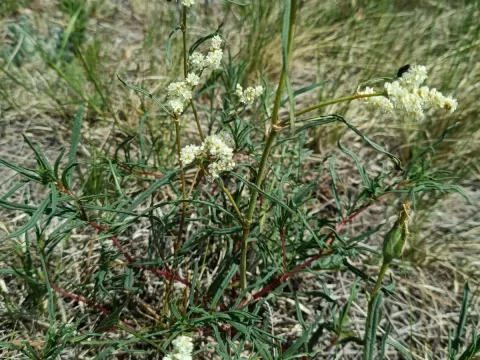
Spreading knotweed
Persicaria divaricata
Persicaria divaricata, commonly known as spreading knotweed, belongs to the Polygonaceae family. It is a robust perennial plant known for its vigorous growth, high frost resistance, and ability to thrive in temperate climates across its native Eurasian range.
What the section contains
Spreading knotweed
The crop prefers well-drained, fertile soil types, specifically loamy or sandy loam substrates with a neutral pH level. Sufficient sunlight exposure is crucial for the optimal development of the plant biomass and the synthesis of active secondary metabolites.
Agronomic management requires consistent weed control during the establishment phase, as young plants are sensitive to competition. Planting should be spaced adequately to ensure airflow, which helps in preventing moisture-related complications in the crown area.
Watering requirements are moderate, but irrigation is recommended during prolonged dry spells to maximize the yield of green matter. The plant exhibits high ecological plasticity, making it suitable for both agricultural cultivation and soil stabilization.
Beyond its agricultural potential, the plant serves as an excellent honey source and is utilized in phytotherapy due to its content of tannins and flavonoids. It is also an ornamental choice for low-maintenance landscaping and perennial beds.
Common pathological issues include powdery mildew and other fungal infections, typically triggered by high humidity levels and poor soil drainage. Implementing proper irrigation scheduling and field sanitation effectively reduces the risk of these diseases.
Major pests that may affect the crop include aphids and various leaf-chewing larvae. Monitoring programs and the use of integrated pest management (IPM) practices ensure the protection of the plant during the critical stages of its vegetative growth.