
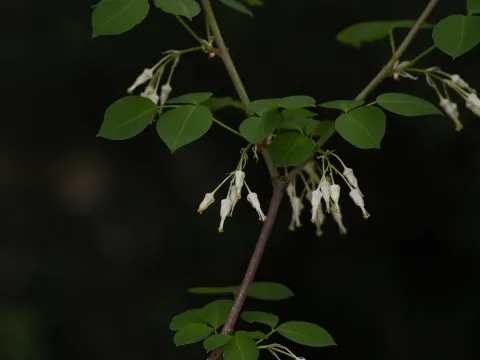
Bolander's bladdernut
Staphylea bolanderi
Bolander's bladdernut (Staphylea bolanderi) is a deciduous shrub or small tree within the Staphyleaceae family. Native to the mountainous regions of California, this plant is valued for its unique drooping white flowers and bladder-like seed pods.
What the section contains
Bolander's bladdernut
The plant thrives in well-drained, fertile soil with a neutral to slightly acidic pH. It performs best in sunny locations but can tolerate partial shade, particularly in climates with very intense summer sun.
Water requirements are moderate; while established plants show decent drought tolerance, consistent moisture during the growing season is essential for vigorous development and healthy leaf production.
This species is well-adapted to cooler mountain climates but requires protection from desiccating winds. In landscaping, it is often used as a specimen plant or in naturalistic shrub borders to attract pollinators.
Cultural practices include applying organic mulch around the base to retain soil moisture and regulate temperature. Annual pruning after the flowering phase helps to maintain a clean structure and promote dense foliage.
The primary threat to Staphylea bolanderi is root rot, which typically occurs in poorly drained soils or areas where water pools during the rainy season, leading to severe decay.
Powdery mildew is a common foliage issue in humid, stagnant air environments, necessitating proper plant spacing to ensure adequate airflow through the canopy.
Insect pests, specifically aphids, may infest new shoots in the spring. While they rarely kill the plant, their feeding can cause stunted growth or distorted leaves if left unmanaged.
Spider mites can also be problematic during hot, dry spells, often causing fine webbing and chlorosis on the leaves, which significantly impacts the aesthetic quality of the shrub.
Effective management includes integrated pest control strategies, such as biological interventions and careful monitoring of early symptoms to prevent larger infestations.