
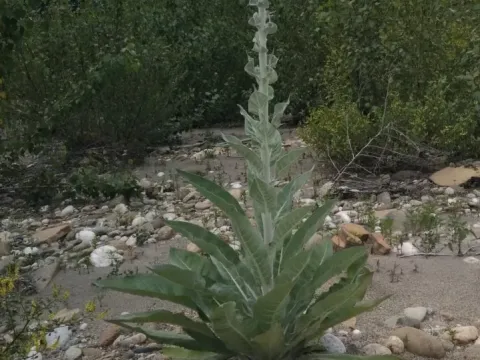
Mullein
Verbascum gnaphalodes
Mullein (Verbascum gnaphalodes) belongs to the Scrophulariaceae family. It is a hardy biennial herb that develops a basal rosette of leaves in its first year and a tall flowering stalk in the second year.
What the section contains
Mullein
Sowing can be done in autumn or early spring. Due to the tiny size of the seeds, they should be sown on the surface of well-prepared soil, requiring only light pressing without deep covering.
Germination requires consistent moisture and a temperature range of 12–18 degrees Celsius. Seedlings typically emerge within two to three weeks, depending on environmental conditions.
The plant grows slowly during the initial vegetative phase. Early weeding is crucial to protect the developing rosettes from being suppressed by more aggressive competitive plant species.
In field production, spacing should be maintained at 45–60 cm between rows to ensure sufficient light penetration and airflow, which is critical for reducing humidity-related diseases.
Mullein is a heliophilic plant, meaning it requires full sun exposure to thrive. It should be planted in open areas where it can receive maximum daily sunlight throughout the growing season.
The soil should be light, sandy, or loamy, and well-drained. Poor drainage is a major stress factor that can lead to root system failure and stunted plant growth.
The species is remarkably drought-tolerant, thanks to the dense layer of hairs (trichomes) on its foliage, which helps the plant retain moisture and withstand high-temperature periods.
Fertilization should be balanced, focusing on nitrogen early in the growth stage to support leaf development and phosphorus/potassium during the transition to the flowering phase.
Soil pH should ideally be neutral or slightly alkaline. The plant does not perform well in waterlogged, heavy clay soils, which prevent proper aeration and root development.
The primary economic value of the plant lies in its flowers, which are widely used in medicine and the herbal industry. Harvests are performed during the peak blooming period of the second year.
Yield depends on the number of productive plants per hectare and the efficiency of the harvest. Careful cultivation can lead to a consistent supply of raw material for pharmaceutical use.
The quality of the harvested material is determined by the presence of flavonoids and mucilage. Rapid processing after harvest is essential to prevent degradation of these active compounds.
The harvest season is extended because flowers on the spikes open sequentially. Regular visits to the plantation are required to collect the blossoms as they reach their prime state.
Correct drying methods, such as utilizing shaded environments with high airflow, are necessary to maintain the vibrant yellow color and medicinal integrity of the dried product.
Powdery mildew is the most common disease, particularly during wet and humid seasons. It affects the foliage and can significantly reduce the overall yield if not controlled.
Pests like caterpillars and aphids may feed on the leaves and buds. Integrated pest management strategies, focusing on early detection and biological control, are recommended.
Root rot caused by Phytophthora or other fungi is a direct result of poor soil management and excessive moisture. Preventing water stagnation is the best defensive measure.
Crowded planting schemes increase the risk of disease spread. Adhering to recommended plant spacing helps maintain a healthy microclimate around each plant.
Crop rotation is an essential agronomic practice to prevent the build-up of soil-borne pathogens. A minimum gap of three to four years before replanting on the same site is advisable.
Flowers should be collected daily in the early morning once the dew has evaporated but before the mid-day heat, which can cause petals to wilt or lose their potency.
Only the fully opened corollas should be picked. Contaminants such as soil, stalks, or leaves must be strictly excluded from the harvest to meet quality standards.
Post-harvest handling requires spreading the blossoms thinly on drying racks. Freshly collected material should never be stacked in deep piles to avoid fermentation and overheating.
Drying is performed at controlled temperatures between 40 and 50 degrees Celsius. This preserves the color and therapeutic value required for premium-grade herbal medicine.
Storage of the finished dry product requires airtight containers in a cool, dark, and dry location to protect it from moisture, pests, and loss of aromatic properties.