
Long-leaved mullein
Verbascum longifolium
Description
Sowing dates
The long-leaved mullein belongs to the Scrophulariaceae family and is typically grown as a biennial herbaceous plant. Sowing is best performed in early spring or autumn, as the seeds require stable soil temperatures to germinate successfully.
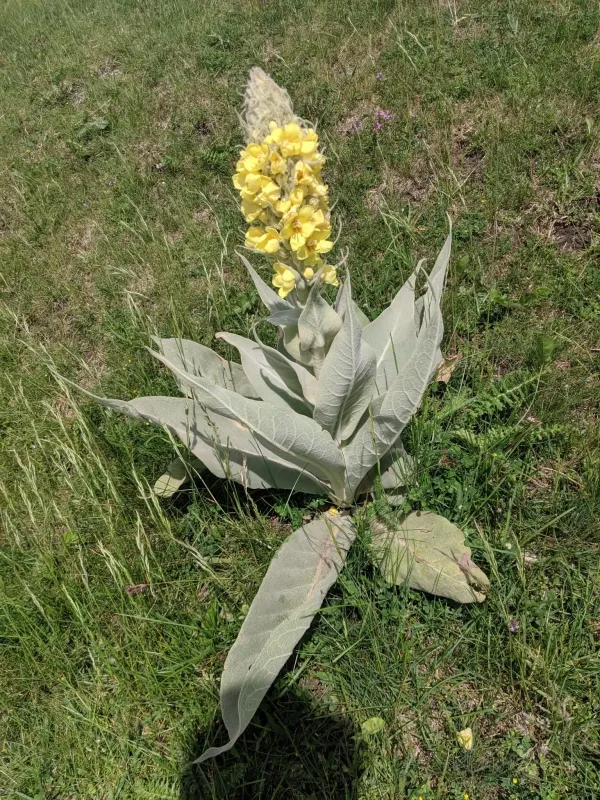
During the first year, the plant develops a basal rosette of elongated, pubescent leaves. Seeds should be sown superficially, as they are light-dependent and require exposure to the sun to break dormancy; covering them with a light layer of soil is sufficient.
When cultivating on a larger scale, maintaining correct spacing is essential, as the plant grows significantly in the second year. A row spacing of 50-70 centimeters is recommended to facilitate proper air circulation and ease of maintenance.
Germination can be a slow process, necessitating constant moisture management in the seedbed during the initial weeks. Young seedlings are sensitive to weed competition, making regular weeding an essential practice in the early growth stage.
Autumn planting allows the seeds to undergo natural stratification, which often leads to more uniform and vigorous seedling emergence compared to spring sowing.
Growing requirements
This species thrives in well-drained, sandy, or loamy soils with a neutral to slightly alkaline pH. It is a light-demanding crop and should be situated in an open area that receives full sun throughout the entire day.
The plant possesses high drought tolerance, largely due to the dense hair-like structures on its leaves which minimize water loss. Conversely, waterlogged conditions must be strictly avoided, as excess moisture quickly leads to root decay.
Long-leaved mullein is hardy, though in regions with harsh winters and no snow cover, minor protection for the basal rosette may be beneficial. Nitrogen-rich fertilizers should be applied sparingly, as high nitrogen levels often decrease the concentration of medicinal compounds.
An optimal temperature range for growth is between 20-25 degrees Celsius. Irrigation is only required during extreme drought conditions, especially when the plant begins to form its tall flowering spikes.
The soil should be thoroughly cleared of perennial weeds before sowing, as young plants compete poorly and can be easily smothered by faster-growing grasses or deep-rooted weeds.
Main diseases and pests
The main threat from diseases is powdery mildew, which develops in humid environments with poor ventilation. The presence of a white, dusty fungal growth on the leaves serves as the primary diagnostic symptom of an infection.
Rust can also affect the plant, causing dark or reddish pustules on the foliage that hinder photosynthesis. Preventive measures include maintaining appropriate spacing and ensuring that the foliage stays dry during evening hours.
Pests such as certain moth larvae and leaf beetles may feed on the foliage. Aphids are also common visitors during the flowering season, as they are attracted to the nutrient-rich sap within the spikes.
Root rot, typically caused by pathogens like Fusarium, can occur if drainage is insufficient. Infected plants must be removed and destroyed to prevent the spores from contaminating the surrounding soil.
Integrated pest management, including regular inspection and the use of organic deterrents, is the most effective way to manage these threats without compromising the quality of the raw material.
Harvesting
Harvesting primarily involves collecting the flowers when they are in full bloom, as this is when the concentration of mucilage and flavonoids is at its peak. This process is labor-intensive and requires careful manual collection to avoid including the calyx.
Drying should take place in well-ventilated, shaded areas or specialized dehydrators at temperatures not exceeding 45 degrees Celsius. Overheating the flowers can lead to enzymatic degradation and loss of color.
High-quality dried flowers should retain their bright yellow color and distinct honey-like scent. Once completely dry, the product must be stored in airtight containers away from light and moisture to preserve its pharmacological efficacy.
Commercially, the plant is used in the pharmaceutical industry for its expectorant properties, making it a valuable component in herbal mixtures for respiratory health. Its phytochemical profile is highly prized in natural medicine.
In addition to medicinal applications, the long-leaved mullein serves as a striking ornamental plant, valued by gardeners for its height and longevity in low-maintenance landscape designs.