
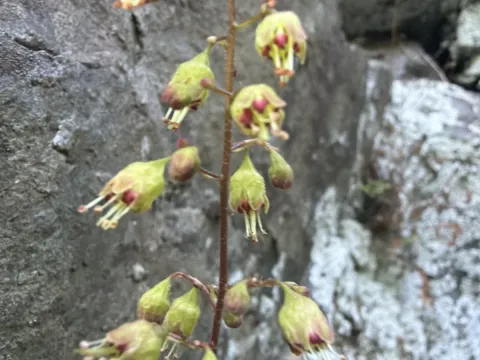
Heuchera pubescens
Heuchera pubescens
Heuchera pubescens, commonly known as hairy alumroot, is a perennial herbaceous plant belonging to the Saxifragaceae family. Native to the Appalachian region of the United States, it thrives in rocky, forested habitats, which dictates its preference for well-drained environments.
What the section contains
Heuchera pubescens
The plant is characterized by its basal foliage, often displaying unique venation and a pubescent (hairy) texture on the leaf surface. Its inflorescence consists of small, bell-shaped flowers on slender, upright stalks, appearing during the summer season.
Regarding climate, this species prefers temperate conditions with high ambient humidity but avoids extreme heat. It is best suited for woodland-like settings where it can receive dappled light, shielding it from intense direct sun which can scorch the foliage.
Soil requirements focus on neutrality or slight acidity with high organic content. The soil must be friable and light; heavy clay soils should be amended with compost or coarse sand to ensure superior drainage and prevent root rot during dormant months.
Cultural practices include consistent watering during dry spells, focusing on the root zone rather than the foliage. Periodic rejuvenation of the rootstock is necessary, as the crown tends to grow upward and become exposed to freezing temperatures over time.
Primary pathological threats include powdery mildew and various leaf spot diseases that thrive in stagnant, humid conditions. Preventive measures include ensuring adequate spacing between plants and utilizing fungicides if signs of infestation appear.
Insect pests such as black vine weevils can cause significant damage to the roots, while larvae may consume the crown. Monitoring for root zone disturbances and applying integrated pest management strategies is recommended for long-term plant health.