
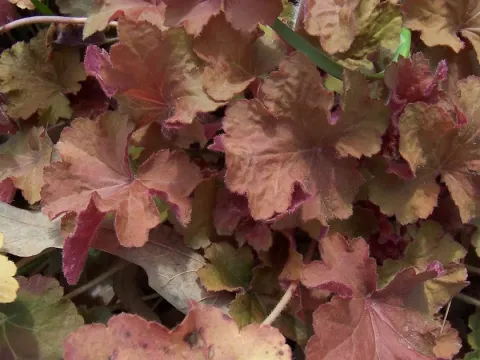
Heuchera hybrids
Heuchera hybrids
Heuchera hybrids belong to the Saxifragaceae family and are a group of perennial ornamental plants derived from species native to North America. They are widely celebrated for their diverse foliage colors, ranging from deep purple to silver and lime green.
What the section contains
Heuchera hybrids
These plants thrive in partially shaded locations with well-drained, nutrient-rich soil. While they can tolerate some sun, excessive heat and intense afternoon light may cause leaf scorch in many popular modern cultivars.
Soil structure is critical; the plants prefer a slightly acidic to neutral pH. It is essential to ensure that the site has excellent drainage, as crown rot can easily develop if water sits around the base of the plant for extended periods.
A key biological feature is the tendency of the crown to become woody and lift above the soil surface over time. Regular "mounding" with compost or dividing the plant every three to four years helps maintain vigor and health.
Climate-wise, Heuchera hybrids are quite adaptable but generally prefer cool to moderate temperatures. Mulching is highly recommended in regions with freeze-thaw cycles to protect the shallow root system from being heaved out of the ground by frost.
The black vine weevil is one of the most serious pests for Heuchera, as the larvae feed on the roots and can cause the plant to collapse suddenly during the growing season.
Slugs and snails are frequently attracted to the succulent foliage, particularly in damp and cool environments, leaving irregular holes in the leaves that detract from their aesthetic value.
Powdery mildew is a common fungal issue that manifests as a white, dusty coating on the leaves, usually triggered by poor air circulation and high humidity levels.
Rust, characterized by orange or brown pustules on the undersides of the foliage, can spread rapidly if conditions remain overly damp, necessitating the removal of infected leaves.
Botrytis or gray mold may affect the crown of the plant during late autumn or early spring, so keeping the area around the plant clean of dead debris is vital for disease prevention.