
Gooseberry-leaved alumroot
Heuchera grossulariifolia
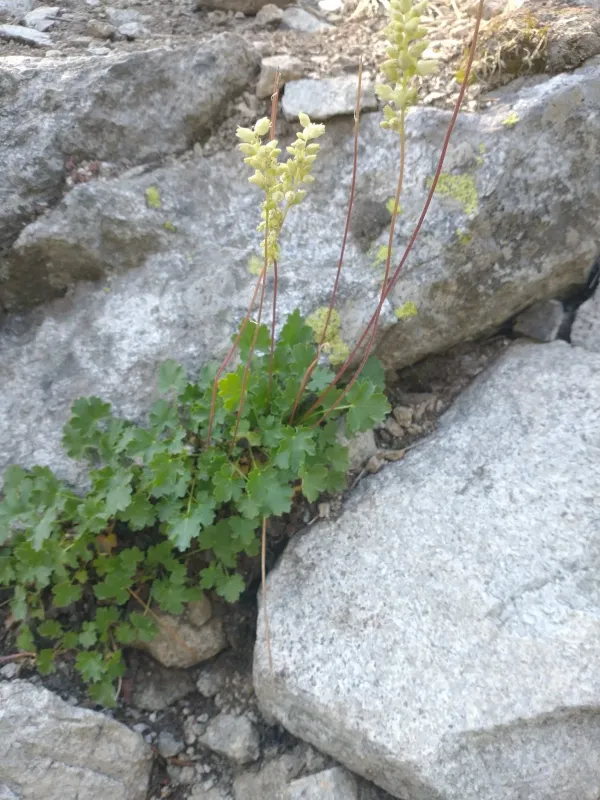
Description
Sowing dates
Sowing seeds of the Gooseberry-leaved alumroot in open ground is best performed in the spring, once the soil has warmed up, usually in May. For stronger seedlings, pre-sowing in containers during March or April is a common practice.
The seeds of this plant are very small, so they should not be buried deep in the substrate; instead, they are gently pressed into the surface of moistened soil. Containers are covered with transparent film to maintain high humidity and create a greenhouse effect.
The optimal temperature for seed germination ranges from 18 to 22 degrees Celsius. Sprouts appear unevenly, typically 2 to 4 weeks after sowing, requiring good but diffused light for proper development.
Pricking out the seedlings into individual pots is carried out after the appearance of two true leaves. Hardening of the seedlings before transplanting to their permanent location begins two weeks beforehand, gradually increasing the time spent outdoors.
Transplanting the seedlings into the garden is done with a spacing of 25–30 centimeters apart, allowing the plants enough room to develop a dense and healthy rosette of leaves.
Growing requirements
The Gooseberry-leaved alumroot belongs to the Saxifragaceae family and is a perennial herbaceous plant valued for its distinct ornamental quality. Its native habitat is the mountain regions of North America, where it adapted to rocky and well-drained substrates.
The culture prefers moderately fertile, loose soil with a neutral to slightly alkaline pH. Waterlogging is detrimental to the root system, so it is essential to provide a reliable drainage layer of gravel or sand during planting.
In its natural habitat, the plant grows on rocky slopes, which dictates its high resistance to drought. In garden settings, the alumroot develops best in partial shade, where the sun softly illuminates the leaves during the morning or evening hours.
Climate requirements include protection from the scorching midday sun, which can cause burns on the delicate leaf blade. The plant is quite winter-hardy, but during snowless winters, light mulching or covering with spruce branches is recommended for the root zone.
Regular but moderate watering is only required during the first year after planting or during periods of extreme heat. Soil over-saturation is more likely to cause crown rot than death from moisture deficiency.
Main diseases and pests
The primary threats to the Gooseberry-leaved alumroot are fungal diseases, such as powdery mildew and rust. The development of these pathogens is favored by high humidity and poor air circulation around the plant foliage.
A frequent pest is the weevil, whose larvae feed on the plant's roots, causing sudden wilting and death. Upon detection of adult weevils, systemic insecticides should be applied according to the manufacturer's instructions.
Slugs and snails can cause serious damage to the leaves, especially during rainy summers. To control them, mechanical traps, wood ash barriers, or specialized granular baits around the planting site are used.
Root crown rot is a physiological disease resulting from improper agricultural techniques. To avoid this issue, ensure the center of the rosette is not buried during planting and prevent water from accumulating near the base of the plant.
- Preventing powdery mildew with regular fungicide treatments.
- Regular inspection of the underside of leaves for early pest signs.
- Sanitary cleaning of the planting area to remove old plant debris.