
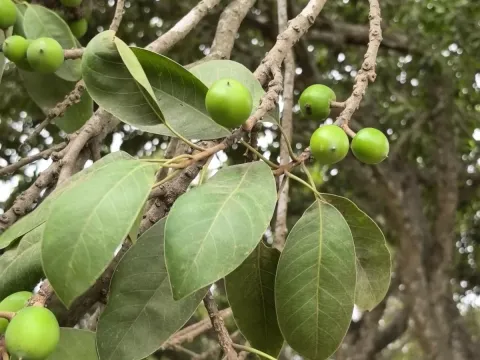
Sideroxylon capiri
Sideroxylon capiri
Sideroxylon capiri is a long-living evergreen tropical tree. In its natural habitat, propagation occurs primarily through seeds, as they possess high germination rates under conditions of high soil moisture.
What the section contains
Sideroxylon capiri
When cultivated in nurseries, seeds should be sown immediately after fruit harvesting, as they tend to lose viability quickly if stored for long periods. The optimal temperature for seed germination is between 25 and 28 degrees Celsius.
Seedlings require shading during their first months of life, as direct sunlight can easily damage their delicate foliage. Maintaining constant substrate moisture without waterlogging is crucial for successful establishment.
Transplanting young trees to their permanent location is typically done when they reach a height of 50 to 70 centimeters. The beginning of the rainy season is considered the best time for planting in cultivation regions.
The growth rate of this crop is relatively slow during the initial stages, which necessitates diligent care of the root zone and protection against competing grasses and weeds.
This species belongs to the Sapotaceae family and is a valuable representative of tropical flora. It thrives in deep, well-drained alluvial soils with a neutral or slightly acidic pH level.
Climatic requirements involve consistently high temperatures throughout the year and a complete absence of frost. Sideroxylon capiri is adapted to tropical forest environments, requiring high air humidity levels.
For proper crown development, the plant needs sufficient space, as it forms a massive trunk and a dense, spreading branch structure upon reaching maturity.
The culture responds positively to moderate applications of organic fertilizers during its early years. Mineral nutrition should focus on a balanced mix of macronutrients to enhance wood density.
Special attention must be paid to wind protection. While the tree's root system is robust, it requires stability within the soil horizon during the first few years of growth to prevent uprooting.
The economic utilization of Sideroxylon capiri is primarily focused on the extraction of its valuable timber, characterized by high density, extreme durability, and longevity.
The wood is frequently used in high-end construction, premium furniture manufacturing, and woodwork that requires resistance to heavy mechanical stress and decay.
The fruits of the plant are also of interest, as they are edible and contain bioactive compounds that are valued by local communities and potentially by the food industry.
Industrial exploitation of forests containing this species requires strict adherence to sustainable restoration cycles, as trees take decades to reach commercial maturity.
Beyond its timber, the latex exudates of some Sideroxylon species have historically found utility, although for S. capiri, the primary value remains its high-quality, decay-resistant wood.
Major threats include wood-boring insects (xylophages), which can damage young shoots and tree bark, thereby significantly reducing the quality of the harvested timber.
Fungal diseases of the root system may develop if drainage regimes are compromised, particularly in cases of prolonged waterlogging in the root zone.
In their natural habitat, young plants often suffer from defoliation caused by specific lepidopteran larvae that target the leaves of Sapotaceae species.
Anthropogenic pressure remains the primary threat: intensive logging without systematic replanting leads to a severe decline in the species' population in the wild.
An effective protection method is to maintain optimal spacing between trees in plantations, which ensures proper air circulation within the canopy and helps prevent the spread of fungal infections.