
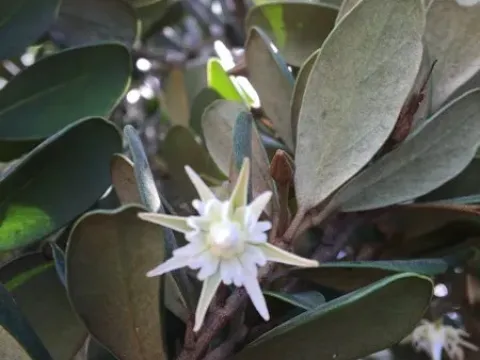
Red milkwood
Mimusops caffra
Red milkwood, scientifically known as Mimusops caffra, belongs to the Sapotaceae family. It is a robust evergreen tree often found along the coastlines of Southern Africa, recognized for its dense, dark green foliage and high tolerance to salt-laden winds and maritime environments.
What the section contains
Red milkwood
The tree thrives in a wide range of soil conditions, showing particular success in sandy soils typical of coastal dunes. It requires full sun to partial shade for optimal growth and serves as a vital ecological component in stabilizing shifting sands.
Climate-wise, Mimusops caffra is adapted to mild, frost-free environments. While it can withstand occasional cool spells, it is not a cold-hardy plant and should be grown in regions where temperatures remain consistently above freezing for the majority of the year.
Agronomic management of this species is relatively straightforward. While young trees benefit from consistent irrigation during the establishment phase, mature specimens develop deep root systems that provide excellent drought resistance, reducing the need for intensive water management.
The plant has diverse uses: its sweet, edible fruits are popular in local cuisine, and the tree’s dense canopy makes it an excellent windbreak for agricultural plots. Its timber is dense and highly durable, making it valuable for crafting handles and small construction items.
Common pests affecting this species include scale insects and mealybugs, which tend to infest the undersides of leaves. These pests can cause chlorosis or overall growth reduction if left untreated during the early stages of infestation.
Fungal diseases related to leaf spots may occur in areas with stagnant air and excessive humidity. Maintaining proper tree spacing is essential to ensure adequate airflow, which acts as a primary defense against fungal spore germination.
Integrated pest management, including the use of horticultural oils, is often effective in controlling localized outbreaks. It is recommended to apply treatments during early morning hours to minimize potential damage to the foliage.
Root rot is the most significant threat for container-grown plants or those in poorly drained soils. Ensuring that the planting site provides efficient water runoff is crucial for the long-term vitality of the tree.
To ensure high plant vigor, gardeners should monitor for signs of nutrient deficiency, as healthy trees are significantly more resilient against common pathogens and seasonal stress factors.