
Indian sandalwood
Santalum album L.
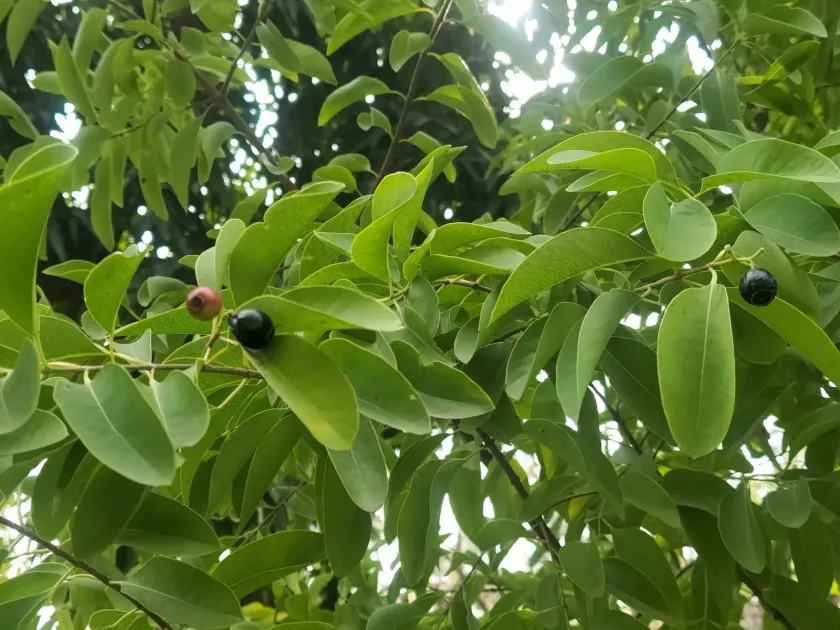
Description
Sowing dates
Indian sandalwood (Santalum album L.) is an evergreen tree of the Santalaceae family. Its seeds have low germination rates due to a hard shell, so scarification or soaking in growth stimulant solutions is applied before sowing.
Sowing is carried out in specialized nurseries in containers, as the plant requires a host plant's root system from the very first weeks of life. Using individual pots allows for an optimal balance of moisture and nutrients for the young seedling.
Selecting a host plant at the seedling stage is a critical agronomic decision. Most often, species like Casuarina or alternative legume crops are used as primary nutrient donors.
Seedlings are transplanted to their permanent location only after they have grown strong enough and formed a stable system of root haustoria. This process requires caution to avoid damaging the delicate connection between the sandalwood roots and the host plant.
The optimal time for field planting coincides with the onset of the rainy season, which ensures a high survival rate for young trees and minimizes transplant shock in open ground.
Growing requirements
Indian sandalwood is demanding regarding temperature conditions: it prefers a tropical climate with moderate rainfall. The best growth indicators are observed at temperatures from 20 to 35 degrees Celsius, while the crop does not tolerate frosts.
For successful cultivation, well-drained soils are necessary, primarily red soils or sandy loams. It is important to avoid waterlogging and stagnant water, as the sandalwood root system is extremely sensitive to rot.
As the tree is a hemiparasite, successful development is impossible without the presence of other plant species in close proximity. In commercial orchards, alternating rows of sandalwood and host plants are planted to ensure full parasitization.
The crop is light-loving; however, minor shading is allowed in the early stages of development to prevent soil overheating. Mature trees require direct sunlight for the full synthesis of sandalwood oil within the wood.
An important factor is the soil acidity level — an ideal pH range is between 6.0 and 7.5. Regular monitoring of soil mineral composition helps maintain tree growth rates at the appropriate level.
Yield
The commercial use of Indian sandalwood is aimed primarily at obtaining valuable wood and essential oil. The process of accumulating aromatic substances in the trunk and roots is very long and takes at least 15 to 30 years.
Yield depends on the age of the tree, lighting conditions, and the effectiveness of interaction with the host plant. The maximum concentration of alpha- and beta-santalol is achieved in the heartwood of mature trees over 25 years old.
Essential oil is obtained through steam distillation of crushed wood, with the highest quality product extracted from the root part. Oil yield can vary from 2 to 5 percent depending on the processing method.
In addition to wood and oil, sandalwood seeds containing fatty acids are valued in agriculture. However, the primary economic profit is provided by supplies to the perfume and pharmaceutical markets.
Crop planning requires long-term investments, as the plantation begins to generate commercially significant income only decades after planting. This makes sandalwood one of the most long-term agricultural crops in the world.
Main diseases and pests
A serious biological threat to Indian sandalwood is a phytoplasma disease known as "spike disease". It leads to leaf deformation, growth cessation, and the gradual death of the entire tree.
Pests such as larvae of various Lepidoptera can damage the foliage, reducing the overall photosynthetic area. Insect population control is carried out using integrated protection methods that minimize chemical use.
Root rots, arising from poor irrigation practices, pose a serious danger to young seedlings. Prevention consists of maintaining a drainage regime and excluding close proximity to waterlogged areas.
Rodents and wild ungulates can cause mechanical damage to the bark of young trees, opening the way for secondary infections. Using protective fencing is a standard measure on plantations during the first years of the crop's life.
Weeds competing with the crop can suppress sandalwood growth by taking resources from its host plants. Regular weeding and clearing of circles around the trunk are critical for maintaining the vigor of the main crop.
Harvesting
Harvesting Indian sandalwood is a complex technological process that requires considering the concentration of sandalwood oil in different parts of the tree. Usually, trees are felled once they reach physiological maturity, when the heartwood becomes dark brown.
The harvesting technology involves uprooting the entire tree, as the roots contain the highest concentration of valuable essential oils. The use of specialized machinery allows minimizing the loss of valuable raw material during extraction from the soil.
After tree removal, primary processing is performed: separating the sapwood (outer part of the wood) from the heartwood. It is the heartwood that is the target product valued in perfumery and medicine.
The wood is sorted by quality and weight, after which it is sent for drying and subsequent processing in distillation units. It is important to maintain storage conditions to prevent the loss of the raw material's aromatic properties.
The entire harvesting process is strictly regulated by environmental legislation, as Indian sandalwood is a species prone to overexploitation in the wild. This stimulates the development of responsible forestry.