
Quandong
Santalum acuminatum (R. Br.) DC.
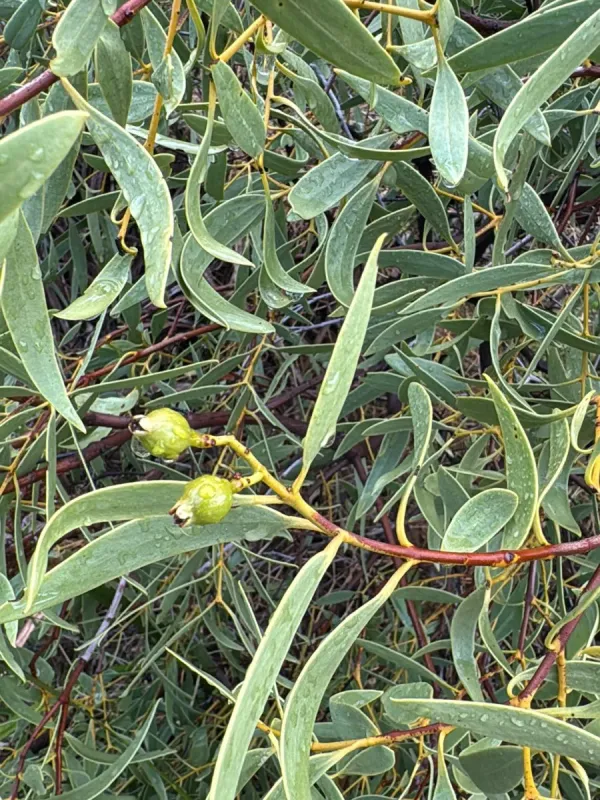
Description
Sowing dates
Propagating the desert quandong from seeds is a delicate process, as the seed embryos are dormant and require specific treatment to trigger successful germination.
The optimal time for sowing is early spring, ensuring soil temperatures are consistently above 20°C to encourage the seeds to break their dormancy cycle.
Because the quandong is a hemi-parasitic plant, it is strictly necessary to sow seeds alongside a host plant, typically a species of acacia or casuarina.
Growers often start seeds in containers where a host plant is already established, ensuring the quandong seedling has immediate access to nutrients.
Direct field sowing requires protection against rodents and birds, which are highly attracted to the seeds and can decimate a crop before germination occurs.
Growing requirements
The desert quandong belongs to the Santalaceae family and is native to the arid interior regions of Australia, adapted to harsh environmental conditions.
The species thrives in well-drained sandy or loamy soils, which are typically low in organic matter and nutrients, matching its natural habitat.
While the tree is highly drought-tolerant, supplemental irrigation during the flowering and fruit-setting stages is vital for achieving a sustainable commercial yield.
Exposure to full sunlight is essential, as the species requires high levels of solar radiation to maintain its metabolic functions and fruit development.
As a hemi-parasite, the quandong requires a healthy root connection to a host plant to extract water and essential minerals throughout its lifecycle.
Yield
When grown from seeds, trees generally begin to produce their first significant crops approximately 4 to 5 years after being transplanted into the field.
A mature, well-tended quandong tree is capable of producing between 10 and 25 kilograms of bright red fruit per harvest season under ideal conditions.
Total yield is heavily influenced by the vigor of the host plant, as a strong and healthy host provides the necessary support for maximum fruit production.
Fruit ripening is often staggered over several weeks, necessitating multiple manual harvest passes to capture the fruit at the peak of its quality.
Commercial utilization of the harvest includes selling fresh fruit, processing it into jams and sauces, or air-drying it for long-term supply chains.
Main diseases and pests
Young quandong trees are highly vulnerable to browsing by herbivores such as kangaroos, rabbits, and livestock, requiring robust fencing for protection.
Excessive soil moisture in the root zone can trigger fungal pathogens, often resulting in root rot, which is a major cause of mortality in plantation settings.
Insect pests, particularly fruit flies, pose a threat to maturing fruit, potentially reducing the quality and shelf-life of the harvest for fresh market sales.
Maintaining the surrounding area free of competitive weeds is important, though cultivation must be shallow to avoid damaging the roots of the host plant.
While disease outbreaks are relatively uncommon, monitoring for viral indicators is necessary, as insects can act as vectors in dense commercial orchards.
Harvesting
The harvest is conducted by hand once the fruits turn a vibrant crimson red and show a slight softness, indicating they are fully ripe and ready for use.
Post-harvest handling is critical, as fresh quandong fruit has a short shelf-life and should be refrigerated or processed within 24 hours of picking.
The hard, pitted stones remaining after processing are highly valued for their oil content, which is used extensively in high-end cosmetic formulations.
Many growers use ground covers or nets spread beneath the tree canopy to catch fruit that drops naturally, preventing bruising and soil contamination.
Freezing the harvested fruit is a standard industry practice, effectively preserving the intense tart flavor and nutrients for use throughout the year.