
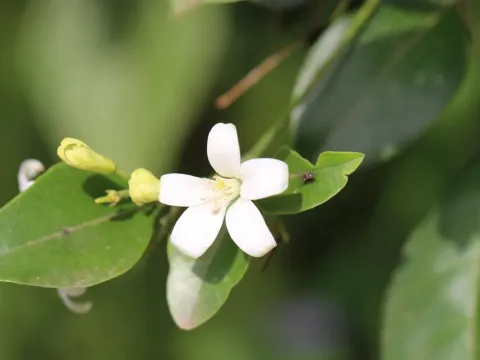
Murraya glenieii
Murraya glenieii
Murraya glenieii is a rare, evergreen species belonging to the Rutaceae family, native to the tropical regions of Sri Lanka. This plant is scientifically recognized for its distinct botanical characteristics that differentiate it from the common Murraya paniculata.
What the section contains
Murraya glenieii
The culture thrives in high-humidity tropical climates where temperatures remain consistently warm throughout the year. It does not tolerate frost or cold drafts, making it suitable mainly for greenhouse cultivation or specialized indoor environments in temperate zones.
Soil requirements for Murraya glenieii involve well-draining, nutrient-rich substrates with a slightly acidic profile. Incorporating organic matter such as peat moss or leaf mold is highly beneficial for establishing a robust root system capable of nutrient uptake.
Proper water management is essential for this plant; it requires consistent moisture without saturation. Overwatering is the most frequent mistake in cultivation, as stagnant water quickly leads to root hypoxia and subsequent decline of the plant specimen.
Light exposure should be managed carefully, favoring bright but filtered light conditions. While the plant can tolerate partial shade, insufficient light will negatively impact the flowering cycle and overall growth density, leading to leggy, unproductive stems.
Spider mites are the most prominent pest concern for Murraya glenieii, especially in environments where humidity levels are not properly regulated. Regular misting and proper airflow are the primary methods of preventing mite outbreaks in cultivation.
Scale insects present a significant threat to the plant's health by sapping vital nutrients from stems and foliage. Integrated pest management strategies, including the use of horticultural oils, are effective for controlling these infestations safely.
Root rot caused by pathogenic fungi such as Phytophthora remains the primary physiological threat. To mitigate this risk, growers must ensure that the planting medium is sterile and that containers possess adequate drainage holes.
Nutritional deficiencies, specifically magnesium and iron, often manifest as interveinal chlorosis. Maintaining an appropriate soil pH is crucial to ensure that these essential minerals remain available for plant uptake throughout the growing season.
Preventative hygiene, including the removal of dead or decaying plant material, is necessary to minimize the risk of secondary infections. Monitoring the plant for early signs of disease ensures that corrective actions can be taken before damage spreads.