
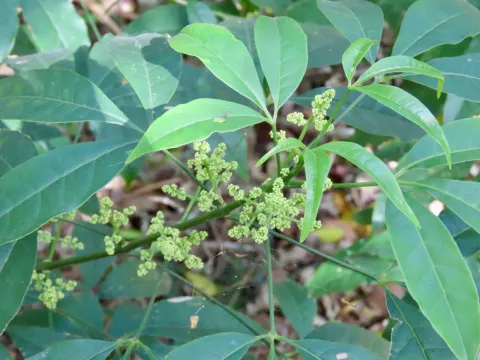
Melicope pteleifolia
Melicope pteleifolia
Melicope pteleifolia is a member of the Rutaceae family, sharing characteristics with other citrus relatives. It is a perennial evergreen plant that thrives in tropical climates characterized by warm temperatures and high humidity.
What the section contains
Melicope pteleifolia
The plant originates from Southeast Asia, where it is found in diverse habitats. It requires a stable environment and is sensitive to extreme temperature drops or frost, which limits its commercial cultivation to specific climatic zones.
Soil requirements involve well-drained, fertile substrates with a neutral or slightly acidic pH. The plant cannot tolerate waterlogging, which often leads to root rot and failure in production fields.
Light intensity plays a crucial role in the development of its foliage. While established trees can withstand full sun, younger specimens benefit from partial shade to prevent leaf scorch and ensure optimal transpiration.
Agrotechnical management requires consistent irrigation protocols, particularly during dry seasons, combined with balanced nutrition to promote dense canopy formation and leaf production.
The primary economic value of Melicope pteleifolia lies in its foliage, which is harvested for medicinal purposes. The leaves contain biologically active compounds prized in traditional medicine for their anti-inflammatory properties.
It also holds significant potential in the essential oil industry. The fragrant glands in the leaves provide a unique aromatic profile suitable for culinary applications and natural cosmetic formulations.
Plantation management typically involves pruning cycles that allow for the periodic harvesting of biomass without compromising the long-term health of the trees.
Post-harvest handling is critical, as drying should occur in controlled environments to preserve the volatile oils found within the leaf tissue.
In regions of growth, the plant is also valued for its ornamental function, often utilized in forestry-based farming systems that combine timber production with non-timber forest products.
The crop is susceptible to common sap-sucking insects such as aphids, spider mites, and scale insects. These pests can significantly reduce yields by draining energy from the developing leaves.
Fungal diseases, specifically leaf spot, frequently occur in plantations with poor ventilation or high humidity levels. These pathogens can compromise the quality of the raw material.
Preventive measures include the application of copper-based fungicides during the rainy season and ensuring proper spacing between plants to maximize airflow.
Integrated pest management is recommended, focusing on the introduction of natural predators to control insect populations without harming the leaf chemistry.
Drainage maintenance is the most effective cultural practice to mitigate the risk of soil-borne pathogens, ensuring the root zone remains healthy and productive over the tree's lifespan.