
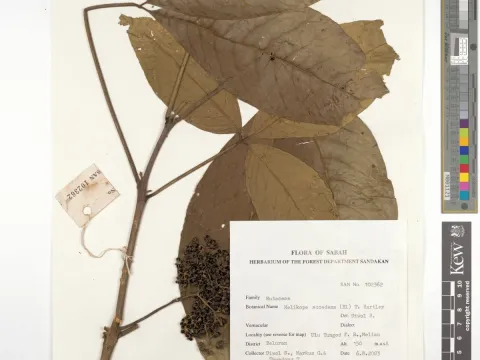
Melicope accedens
Melicope accedens
Melicope accedens is a significant evergreen woody plant belonging to the Rutaceae family. Native to the lush tropical rainforests of Southeast Asia, this species has evolved to thrive in high-humidity environments with stable, warm temperatures throughout the year.
What the section contains
Melicope accedens
In terms of soil requirements, this species favors well-draining, nutrient-rich substrates. It performs best in soils with high organic matter content, typically found in areas with well-decomposed forest litter, maintaining a slightly acidic to neutral pH level.
Light management is crucial for the cultivation of Melicope accedens. As a forest-dwelling species, it prefers filtered or dappled sunlight. Direct exposure to intense equatorial sun can damage the foliage and negatively impact the tree's early growth stages.
The plant requires consistent moisture but is highly susceptible to root rot if waterlogged. Therefore, proper site selection and effective drainage systems are essential components of successful silvicultural management.
Agronomic practices include the regular application of mulch to preserve soil moisture and temperature stability. Monitoring the nutrient levels in the soil is also vital to support the vigorous growth necessary for high-quality wood production.
The primary economic utilization of Melicope accedens lies in its timber, which is valued for its density and unique grain patterns. Sustainable harvesting practices are essential to ensure the longevity of the stands and the preservation of biodiversity.
Beyond timber, the species is increasingly recognized for its aesthetic qualities in tropical landscaping. Its dense foliage and balanced growth habit make it a suitable candidate for park planning and urban greening projects in appropriate climates.
Research into the secondary metabolites of the plant indicates the presence of aromatic compounds, suggesting potential future applications in the essential oil industry and traditional botanical pharmacology.
When planning a harvest cycle, foresters must assess the age and diameter of the trunks to ensure optimum wood maturity, while also thinning out unhealthy specimens to promote the growth of the remaining stand.
Proper management of the forest canopy during harvesting phases helps maintain the microclimate necessary for natural regeneration, ensuring that the population of Melicope accedens remains resilient over the long term.