
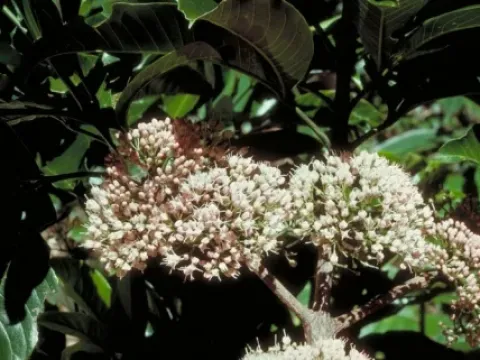
Melicope bonwickii
Melicope bonwickii
Melicope bonwickii is a significant woody plant species belonging to the family Rutaceae. Native to the tropical regions of Australia and nearby island territories, this tree is well-adapted to humid forest conditions where it plays a vital role in the local ecology.
What the section contains
Melicope bonwickii
The plant exhibits distinct botanical features such as compound leaves equipped with essential oil glands, a common characteristic within the Rue family. It is known for its robust growth habit and potential to reach substantial heights when conditions are favorable.
Agricultural and forestry cultivation of this species requires a tropical climate with high, stable temperatures and consistent rainfall. The tree is sensitive to soil conditions; it demands well-draining soils rich in organic matter to thrive and prevent root rot.
In terms of silviculture, site selection is the most critical factor. Areas prone to waterlogging must be avoided, as the species relies on high aeration within the root zone to maintain its metabolic functions and growth rates throughout the year.
The primary utility of Melicope bonwickii lies in its wood production. The timber is recognized for its durability and grain quality, making it a desirable material for high-quality carpentry and specialized construction projects in its native range.
The primary threats to Melicope bonwickii include various fungal pathogens that flourish in high-humidity tropical environments. Root system infections often arise if the planting site does not provide adequate drainage or if trees are subjected to mechanical stress.
Insects, particularly those that feed on young foliage or bore into the bark, represent a significant threat to young stands. Integrated pest management strategies are essential to mitigate the impact of these pests and ensure the survival of the trees during their early growth stages.
Environmental factors, such as extreme tropical storm events, can cause severe structural damage to the tree canopy. Such damage can leave the tree vulnerable to secondary pest infestations or fungal pathogens entering through the damaged tissue.
Virus-related diseases, which are often transmitted via insect vectors, can compromise the tree's health by reducing its photosynthetic capacity. Monitoring the surrounding vegetation is crucial for preventing the spread of these pathogens across forest plots.
Sustainability issues, including habitat loss and improper logging practices, remain major threats to the natural populations of this species. Modern forestry focuses on ensuring that harvesting does not exceed the natural regenerative capacity of the tree stands.