
Flindersia ifflaiana
Flindersia ifflaiana
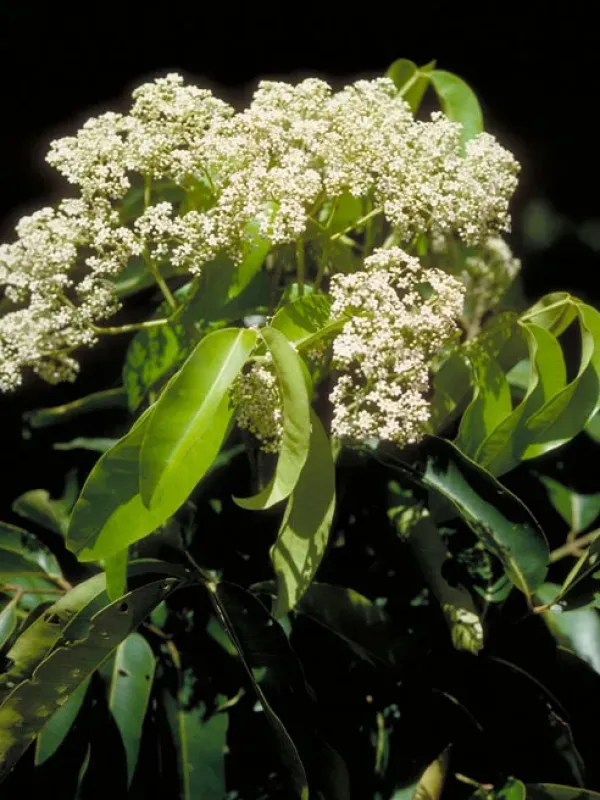
Description
Growing requirements
Flindersia ifflaiana belongs to the Rutaceae family. It is a large evergreen tree that can reach heights of up to 40 meters in its native habitat, specifically within the tropical rainforests of northern Queensland, Australia.
The plant thrives in well-drained, fertile alluvial soils or deep loams. It is highly sensitive to waterlogging, therefore site selection for plantation establishment must strictly avoid low-lying or swampy areas.
Climatic requirements are stringent, necessitating high annual rainfall and consistently warm temperatures throughout the year. The species is frost-intolerant, restricting its potential cultivation zone to strictly tropical regions.
When grown in commercial forest plantations, the tree exhibits a rapid growth rate in its juvenile stage provided there is adequate solar radiation. Excessive shade during the early development phase can significantly stunt the growth of saplings.
Silvicultural management includes routine clearing of weeds between rows, which compete with the young trees for essential nutrients and soil moisture during the crucial establishment years.
Yield
The primary economic value of Flindersia ifflaiana lies in its high-quality timber, commercially referred to as Australian teak or Queensland hickory.
The wood is renowned for its exceptional strength, hardness, and durability. It possesses natural resistance to decay and termite infestation, rendering it a premier choice for demanding exterior construction projects.
Key industrial applications include the production of heavy-duty flooring, marine decking for shipbuilding, and specialized components for heavy machinery manufacturing.
The timber yield per hectare is significantly influenced by planting density and the rigorous application of thinning regimes, which are necessary to encourage the development of clear, straight boles free from knots.
Due to its superior physical and mechanical properties, this timber is highly sought after in premium woodworking markets and as a reliable construction material for extreme operational environments.
Main diseases and pests
Major risks to plantation health are primarily linked to damage from defoliating insects, which can feed on young shoots and significantly decrease the rate of biomass accumulation.
In high-humidity environments, fungal infections of the root system may occur, particularly in sites where soil drainage is inadequate or water management is neglected.
Severe tropical cyclones and storms pose a substantial threat to mature trees due to their large canopy surface area, often resulting in windthrow and structural damage to the plantation.
Pest management relies on proactive phytosanitary monitoring of saplings and the implementation of integrated pest management (IPM) strategies tailored for forestry ecosystems.
Maintaining appropriate spacing between planted individuals helps to mitigate the risk of rapid disease transmission within the population of the forest stand.