
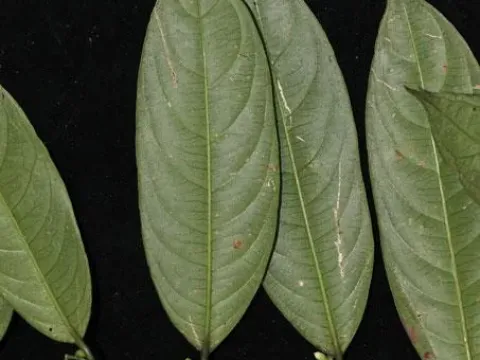
Urophyllum glabrum
Urophyllum glabrum
Urophyllum glabrum is a species of flowering plant belonging to the Rubiaceae family. Native to the lush tropical rainforests of Southeast Asia, it typically manifests as an evergreen shrub or a small tree growing in the understory.
What the section contains
Urophyllum glabrum
The plant demands high humidity and consistently warm temperatures to thrive. In a cultivation setting, it is essential to replicate the dense, shaded conditions of its natural habitat to prevent stress caused by excessive heat or intense light.
Soil requirements focus on high organic content and excellent drainage properties. A loose, aerated substrate is critical to maintain root health and prevent the fungal complications associated with waterlogged soil.
During the growing season, consistent moisture is required, although the plant is sensitive to anaerobic soil conditions. It is advisable to use containers with adequate drainage holes if the plant is grown in a greenhouse or controlled environment.
Protecting the plant from cold drafts is a fundamental aspect of its maintenance. Since it lacks natural resistance to temperature drops, any exposure to cooler air can lead to severe physiological damage and stunted development.
Urophyllum glabrum is not categorized as a major commercial crop. Its value is predominantly scientific and botanical, with research focusing on its phytochemical composition rather than large-scale agricultural output.
The plant produces small, fleshy fruits that contribute to local forest biodiversity. There are no standardized yield metrics or agricultural protocols for harvesting this species at an industrial level.
Academic interest in the plant is tied to its medicinal potential. Various species within the Rubiaceae family are known for producing alkaloids, making this plant a candidate for screening in pharmaceutical research.
Propagation is primarily achieved through seeds. Because the seeds are recalcitrant, they must be sown shortly after collection to ensure viability. Propagation by cuttings is also possible under high-humidity conditions.
Future agricultural potential remains theoretical, contingent upon findings regarding the economic utility of its chemical constituents. Currently, it remains a plant of interest for specialized botanical collections.