
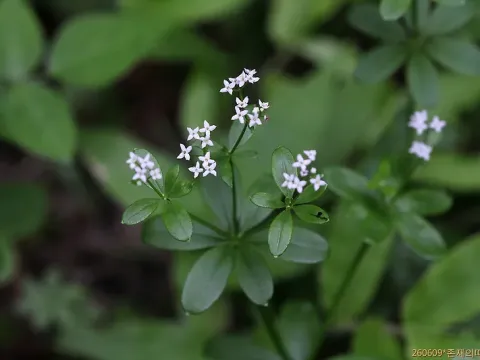
Tokyo bedstraw
Galium tokyoense
Tokyo bedstraw (Galium tokyoense) is a member of the Rubiaceae family. This perennial herb is native to East Asia, primarily documented in the flora of Japan, where it thrives in specific ecological niches.
What the section contains
Tokyo bedstraw
Botanically, the plant features square stems and whorled leaves, typical of the Galium genus. Its growth habit is prostrate to ascending, often forming dense mats if left undisturbed in favorable growing conditions.
Regarding soil requirements, the crop prefers well-drained loamy soils with a neutral pH. It is sensitive to waterlogging, so site selection with proper drainage is essential for successful cultivation of this species.
Climate needs are consistent with temperate zones, requiring adequate sunlight and moisture during the spring development phase. It generally shows good resilience to cold, though frost protection may be needed in exposed agricultural zones.
In terms of хозяйственное (economic) use, the plant is harvested for its potential phytochemical properties. It is often regarded as a specialty crop in niche herbal cultivation sectors requiring specific climatic stability.
The primary threats include powdery mildew, which can significantly reduce foliage quality under humid and poorly ventilated conditions, particularly in high-density planting schemes.
Root pathogens remain a concern in heavy soils that do not provide enough aeration. These issues often lead to stunted growth and reduced biomass yield at the end of the season.
Insect pests such as leaf-eating beetles and spider mites can cause localized damage. Integrated pest management strategies are advised to keep populations below economic injury levels.
Weed competition during the early establishment phase is critical, as young Tokyo bedstraw plants are not competitive against fast-growing aggressive weeds found in similar habitats.
Preventative cultural practices, including consistent crop rotation and the use of healthy propagation material, remain the most effective ways to mitigate disease risks for this herb.