
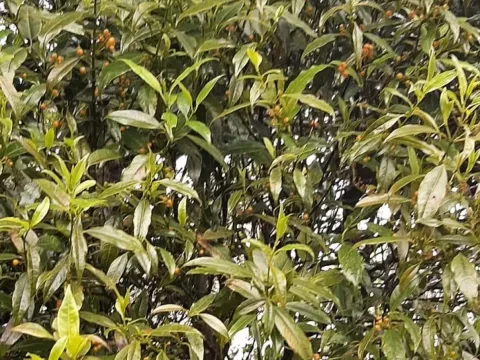
Urophyllum ceylanicum
Urophyllum ceylanicum
Urophyllum ceylanicum is a perennial evergreen shrub belonging to the Rubiaceae family. This species is native to the tropical forests of Sri Lanka, where it thrives in the understory of dense, humid forest environments.
What the section contains
Urophyllum ceylanicum
The botanical structure of this plant is adapted to low-light conditions, typical of the forest floor or lower canopy. Its leaves are broad and leathery, designed to maximize photosynthetic efficiency in the filtered light of a tropical rainforest.
The climate requirements for this culture are strict: it requires consistently warm temperatures, ideally between 22 and 28 degrees Celsius, and high atmospheric humidity levels, preferably above 75 percent throughout the year.
Soil conditions are critical for its survival. The plant demands well-draining, nutrient-rich soil with a high content of organic matter. It naturally grows in leaf litter and acidic soils, which must be replicated in cultivation to avoid nutritional deficiencies.
Protection from direct, harsh sunlight and strong winds is essential. In an agricultural or nursery setting, the use of shading nets or greenhouse glass with light-diffusing properties is recommended to simulate the natural canopy protection.
The economic or agricultural utility of Urophyllum ceylanicum is currently limited to botanical conservation, scientific study, and ornamental use in specialized tropical collections. It is not grown as a commercial food or fiber crop on a mass scale.
The plant produces small berry-like fruits, which contribute to the local ecosystem by providing food for avian and small mammalian species in its native range. Seed production is cyclical and depends on stable environmental conditions.
Research potential is high, as the Rubiaceae family is known for containing diverse chemical compounds. Phytochemical studies on similar species suggest that Urophyllum may possess interesting secondary metabolites that could be researched for medical applications.
Cultivation practices focus on maintaining consistent moisture levels in the root zone without creating waterlogged conditions, which could lead to root rot. Organic fertilizers applied in dilute forms are preferred over synthetic mineral fertilizers to maintain soil biological health.
Given its slow growth rate, the culture requires patience from the grower. Consistent environmental monitoring is the key factor in maintaining the vigor of the plant over its multi-year development cycle.