
Vangueria cyanescens
Vangueria cyanescens
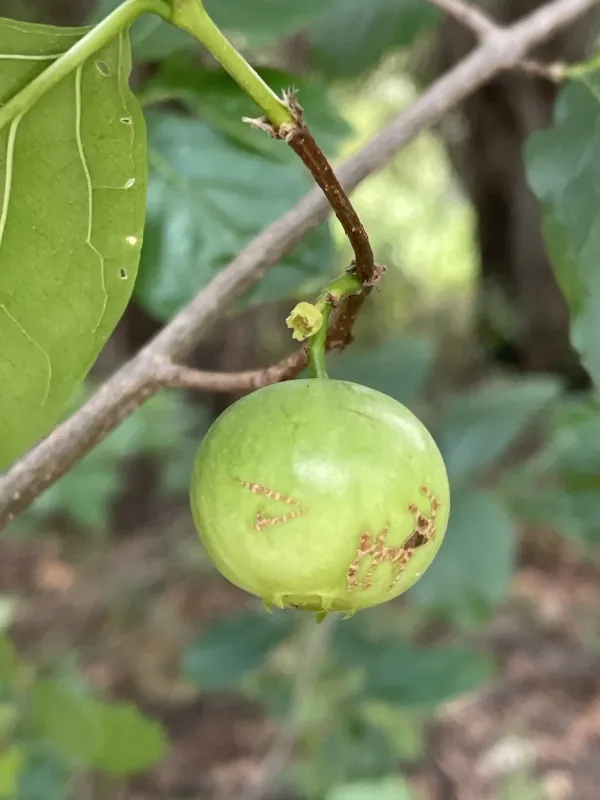
Description
Growing requirements
Vangueria cyanescens is a prominent member of the Rubiaceae family, native to the tropical landscapes of sub-Saharan Africa, where it thrives in diverse ecological niches.
The plant requires deep, fertile, and well-drained soils to establish a strong root system capable of supporting heavy fruit production in mature stages.
In terms of climatic demands, it prefers warm, humid conditions with distinct wet and dry seasons, typical of its native tropical habitat.
Agricultural management involves careful site selection to ensure maximum sun exposure, which is critical for the photosynthetic activity and final fruit quality.
Regular maintenance practices include light pruning to manage canopy density and facilitate efficient nutrient distribution to the developing branches.
Yield
The fruit of Vangueria cyanescens is highly valued for its nutritional profile, containing essential vitamins and antioxidants beneficial for dietary intake.
Yield capacity is influenced by soil moisture management and the availability of organic matter, which should be supplemented during the primary growing cycle.
Small-scale farming operations often integrate this crop into agroforestry systems, benefiting from both the edible yield and the ecological stability provided by the trees.
While yields can fluctuate based on annual rainfall patterns, well-tended trees provide consistent harvests over many years due to their perennial growth habit.
Producers aim to optimize yields by implementing integrated pest management strategies that protect the floral buds from common tropical insects.
Harvesting
Harvesting usually occurs when the fruits exhibit a specific color transition, indicating that the chemical composition is ideal for consumption.
Manual harvesting is the preferred method to ensure that only mature fruits are selected, minimizing damage to the tree's bark and foliage.
Post-harvest logistics focus on rapid cooling or processing to maintain the fruit's integrity, as fresh produce is prone to spoilage in tropical climates.
Storage methods, such as controlled drying, are employed to preserve the fruit for off-season use, thereby maximizing the economic return of the cultivation process.
- Careful hand-picking of ripe fruits.
- Grading based on size and skin condition.
- Sanitation of the harvest area to prevent fungal development.