
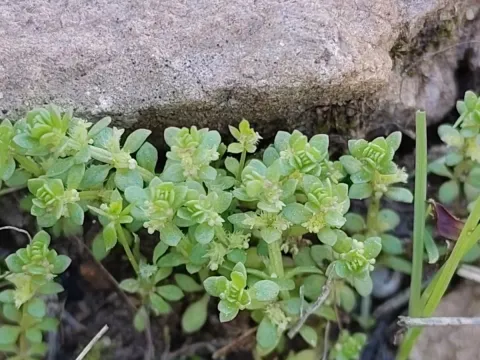
Valantia
Valantia
Valantia is a genus of annual herbaceous plants belonging to the family Rubiaceae. These plants are closely related to the well-known genus Galium, sharing similar structural features in their inflorescences and leaf arrangement.
What the section contains


Valantia
The native range of the genus Valantia covers the Mediterranean region, extending across Southern Europe, North Africa, and the Middle East. They typically inhabit open, sunny, and stony slopes, showing a strong adaptation to Mediterranean climates.
The botanical characteristics of Valantia include branched stems and opposite or whorled leaves with small stipules. The flowers are small and distinct, often featuring a persistent calyx that develops into a peculiar structure as the fruit matures.
The plant has moderate environmental requirements, thriving best in well-drained, nutrient-poor, or rocky soils. It is remarkably resilient to drought conditions, which allows it to thrive in environments where other moisture-loving species might fail.
While not a major commercial crop, members of this genus are subjects of interest for botanical research, particularly regarding the phytochemical properties and the presence of secondary metabolites typical of the Rubiaceae family.
Like many plants in the Rubiaceae family, Valantia can be susceptible to powdery mildew, especially if environmental conditions include high humidity and poor ventilation among the foliage.
Pests such as aphids are a primary concern, as they often colonize the tender tips of the growing stems, stunting development and potentially spreading viral infections.
Soil-borne nematodes can pose a risk to the root system, although this is more relevant when the plant is grown in monoculture or disturbed, non-native soil environments.
In agricultural contexts, Valantia is generally managed as a weed, and control measures often include traditional mechanical cultivation and weeding to prevent competition for nutrients.
Maintaining proper spacing and ensuring adequate soil drainage are the most effective cultural practices to prevent the proliferation of pathogenic fungi and insect infestations.