
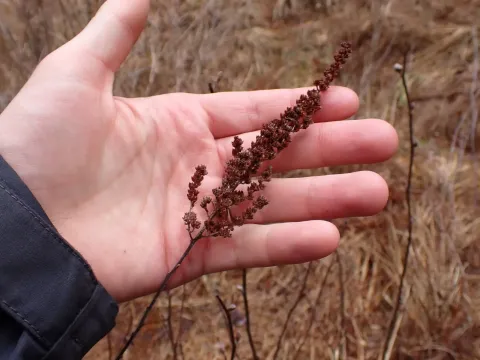
Steeplebush
Spiraea tomentosa
Steeplebush (Spiraea tomentosa) is a hardy perennial shrub belonging to the Rosaceae family. It is native to North America, typically found in wetlands and moist open meadows where it thrives in acidic soil conditions.
What the section contains
Steeplebush
The plant is known for its distinctive pink, steeple-shaped panicles that bloom in late summer. It prefers full sun locations but can tolerate partial shade, provided that the soil moisture levels remain consistent throughout the growing season.
Botanically, it is distinguished by the dense, woolly (tomentose) hairs on the underside of its leaves, which provide a unique texture. It is a clonal shrub, meaning it often spreads through underground rhizomes to form colonies.
Agricultural management involves regular pruning in early spring to remove dead or weak stems. This practice encourages vigorous new growth and ensures the plant remains compact and blooms profusely each season.
The shrub is highly valued for its ecological role as a late-season nectar source for bees, butterflies, and other essential pollinators, making it an excellent candidate for sustainable landscaping and conservation projects.
Powdery mildew is the most frequent fungal issue affecting Spiraea tomentosa, particularly in environments with poor air circulation or high humidity during the late summer months.
Insect pests such as aphids and spider mites can colonize the foliage, leading to yellowing, curling, and reduced photosynthetic capacity of the plant during the active growth period.
Management of these threats includes the strategic application of horticultural oils or systemic insecticides when infestation thresholds are exceeded.
Cultural control methods involve maintaining optimal plant spacing to promote airflow and performing systematic sanitation to remove infected plant material.
Balanced fertilization and careful watering ensure that the shrub remains healthy and resilient, which significantly lowers its susceptibility to pest outbreaks and secondary infections.