
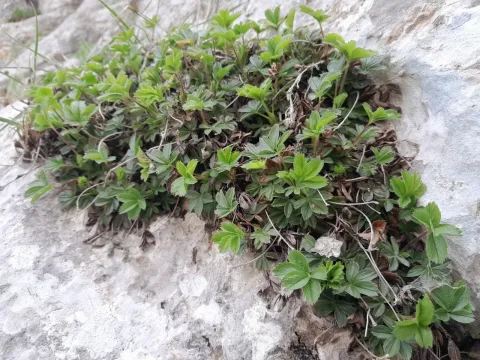
Stemmed cinquefoil
Potentilla caulescens
Stemmed cinquefoil (Potentilla caulescens) belongs to the Rosaceae family. This perennial herb is native to the mountain ranges of Europe, particularly thriving on limestone outcrops and rocky crevices at high altitudes, which has shaped its unique physiological adaptations.
What the section contains
Stemmed cinquefoil
The plant grows in compact, cushion-like rosettes. The stems are ascending, typically reaching 10 to 30 cm in height, and are covered in fine glandular hairs. This structure helps the plant manage moisture and nutrients in harsh, nutrient-poor alpine environments.
In cultivation, this species strictly requires well-drained, gritty, or sandy soils. It is highly intolerant of waterlogging, which often leads to root collar rot. Gardeners should ensure a planting site that mimics the natural rocky habitat to prevent moisture buildup.
Exposure to full sunlight is essential for the health of Potentilla caulescens. It does not perform well in shaded areas, as lack of sun leads to leggy growth and increased susceptibility to fungal diseases. Ideally, it should be positioned in an open area with excellent airflow.
Its primary agricultural and horticultural value lies in rock garden design. Due to its hardiness and elegant foliage, it is a prized species for alpine rockeries, dry stone walls, and xeriscaping projects where it serves as a long-lived ground cover or accent plant.
Fungal pathogens are the most common threat to stemmed cinquefoil, especially in humid climates or poorly drained soil. Root rots represent the primary cause of mortality in cultivated specimens when the soil remains too wet for extended periods.
Pests such as aphids and spider mites can occasionally affect the foliage, particularly during dry, hot spells in the summer. These pests weaken the plant by feeding on cell sap, which can make it more susceptible to opportunistic secondary infections.
Effective management begins with preventative horticultural practices. Ensuring that the crown of the plant is kept dry by surrounding it with a layer of grit or stone mulch is a standard and highly effective technique for disease mitigation in rock gardens.
If an infestation occurs, manual removal or the application of insecticidal soaps is generally sufficient. It is recommended to avoid heavy synthetic fertilizers, as they encourage soft, succulent growth that is more attractive to pests and less resistant to environmental stress.
Maintaining good hygiene in the rock garden is crucial. Removing dead foliage and ensuring that the plant has adequate ventilation helps to minimize the risk of mildew and other common environmental stressors that affect alpine flora in non-mountainous regions.