
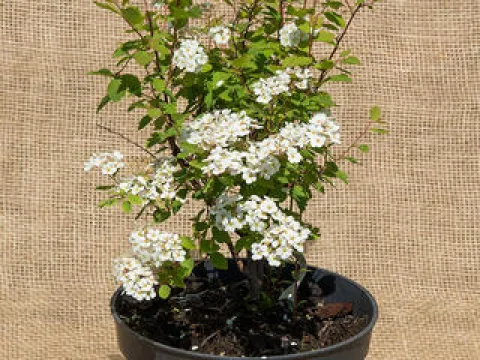
Spiraea trichocarpa
Spiraea trichocarpa
Spiraea trichocarpa, commonly known as Korean spirea, is a flowering shrub belonging to the Rosaceae family. Native to the mountainous regions of Korea, it has become a popular choice for ornamental horticulture worldwide due to its hardiness.
What the section contains
Spiraea trichocarpa
This species thrives best in locations with full sun exposure, although it can tolerate partial shade. Adequate light is essential for the development of the dense foliage and the characteristic white, corymb-shaped flower clusters that bloom in late spring.
The ideal soil for this shrub should be well-draining, moist, and nutrient-rich. It performs poorly in compacted or waterlogged soils, so soil amendment with organic matter is recommended before planting to improve structure and drainage.
Maintenance involves regular watering during dry spells to ensure consistent growth. Pruning should be performed immediately after the flowering period to encourage new growth and maintain a compact, aesthetically pleasing shape for the following season.
In landscaping, Spiraea trichocarpa is highly valued for its elegant, arching branches and intense blooming capacity. It is suitable for use in mixed borders, as a standalone focal point, or as part of a formal hedge planting.
Like many shrubs in the Rosaceae family, Spiraea trichocarpa can be susceptible to fungal issues such as powdery mildew. Proper plant spacing is crucial to ensure good air circulation, which helps reduce the occurrence of these infections.
Aphids are the most common insect pests that infest tender new growth. Early detection is key to control; minor infestations can often be managed by washing the foliage with a forceful stream of water or using insecticidal soaps.
Spider mites may become a problem during hot and dry summer conditions, causing stippling or bronzing on the leaves. Keeping the plant properly hydrated reduces its vulnerability to these pests and mitigates potential damage.
Botrytis blight or grey mold can affect the blooms in rainy seasons. It is important to remove any affected plant material and dispose of it away from the garden to prevent the spread of spores to healthy parts of the plant.
A consistent integrated pest management approach, including dormant oil sprays and maintaining plant vigor through proper fertilization, will ensure the long-term health and ornamental value of your Spirea plantings.