
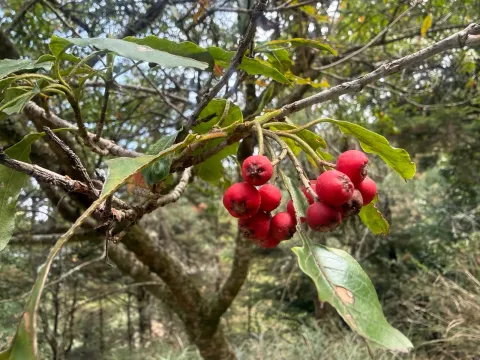
Stranvaesia
Stranvaesia
Stranvaesia is a genus of evergreen or semi-evergreen shrubs and small trees belonging to the Rosaceae family. These plants are appreciated for their ornamental foliage, which often features vibrant colors, and their attractive persistent berries.
What the section contains

Stranvaesia
The native range of this plant extends across the Himalayas and China. It thrives in temperate regions, though it prefers locations sheltered from severe winter frost and drying winds to maintain its evergreen foliage quality.
To cultivate Stranvaesia successfully, one must provide well-drained, fertile soil with a neutral or slightly acidic pH. Waterlogging is detrimental to the root system and must be avoided through proper site selection or soil improvement.
The plant requires full sun to partial shade for optimal health. In regions with intense summer heat, light afternoon shade is beneficial to prevent leaf scorching and excessive water loss.
Standard agrotechnical practices involve consistent hydration during establishment and the application of organic mulch around the root zone to suppress weeds and maintain stable soil moisture levels.
Like many members of the Rosaceae family, Stranvaesia is susceptible to fire blight (Erwinia amylovora). This bacterial disease can cause rapid wilting and necrosis, requiring immediate pruning of affected branches.
Powdery mildew is a common fungal threat, typically appearing in conditions with stagnant air and high humidity. It manifests as a white, powdery coating on leaves, which can stunt the plant's growth.
Aphids often target the tender new growth during the spring season. These insects feed on sap, causing leaf curling and potentially transmitting viral diseases to the shrub.
Scale insects and spider mites can also be problematic, particularly during hot and dry spells. Monitoring the undersides of leaves and branches is crucial for early detection and mitigation.
Maintaining high garden hygiene is essential for disease prevention. This includes cleaning fallen leaves, ensuring proper spacing between specimens for airflow, and pruning dead wood to keep the plant vigorous.