
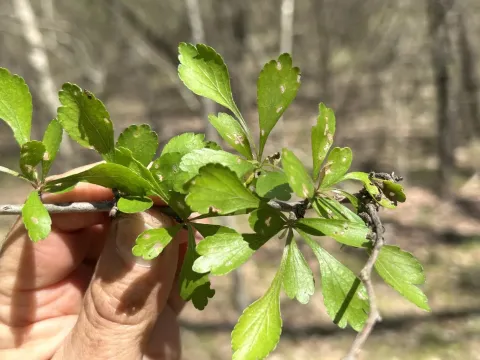
Spoonleaf hawthorn
Crataegus spathulata
Spoonleaf hawthorn (Crataegus spathulata) is a member of the Rosaceae family. Native to the southeastern United States, this shrub or small tree is recognized for its unique, spatulate leaves and dense growth habit, often found in woodland margins.
What the section contains
Spoonleaf hawthorn
This species is highly adaptable to various soil conditions, demonstrating success in both heavy clay and lighter, sandy loams. It prefers sites with adequate drainage and a neutral to slightly acidic pH level for optimal nutrient uptake.
Exposure to full sunlight is essential for the healthy development of Crataegus spathulata. While it can tolerate partial shade, maximum flowering and fruit production are achieved in locations receiving at least six hours of direct sunlight per day.
The cultural requirements include moderate watering, especially during the establishment phase. Once mature, the tree shows improved drought tolerance, making it a low-maintenance choice for various regional landscape applications.
Economically and ecologically, this hawthorn is valued for its contribution to biodiversity. Its persistent red fruits serve as a vital food source for local bird populations during the dormant winter months, enhancing the garden's ecological function.
Crataegus spathulata is susceptible to various fungal diseases, with cedar-hawthorn rust being one of the most significant. Preventive measures, such as avoiding overhead irrigation and applying appropriate fungicides, are recommended to maintain plant health.
Powdery mildew often attacks in environments with stagnant air and high humidity. Managing plant spacing and implementing regular pruning to enhance airflow are critical strategies to mitigate the impact of this common fungal issue.
Pest pressure from aphids and leaf miners can affect the foliage's aesthetic quality. Early detection through regular monitoring allows for the targeted application of horticultural oils or soaps, minimizing damage to the tree.
Fire blight is a bacterial disease that can affect hawthorns, leading to dieback of branches. Any diseased wood must be removed immediately, ensuring that tools are disinfected with alcohol between cuts to prevent cross-contamination.
A proactive agronomic management plan, focusing on balanced fertilization and proper irrigation, significantly strengthens the plant's natural resilience. This reduces the dependency on chemical inputs for maintaining a robust ornamental hedge.