
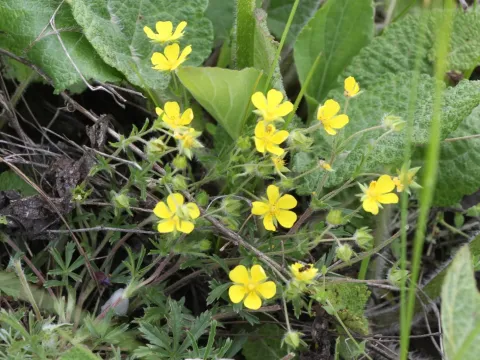
Spreading cinquefoil
Potentilla patula
Spreading cinquefoil (Potentilla patula) is a perennial herbaceous plant from the Rosaceae family. It is native to the steppe and forest-steppe zones, demonstrating high natural resilience in harsh environments.
What the section contains
Spreading cinquefoil
This crop prefers well-drained, nutrient-moderate soils. It performs well on sandy loam and calcareous substrates, as these soil types mimic its natural habitat and prevent root rot during wet seasons.
The species is highly heliophilic, meaning it thrives under direct sunlight. In terms of climate, Potentilla patula is winter-hardy and shows significant tolerance to drought, making it an efficient crop for arid agricultural zones.
Botanically, it features a sturdy rhizome, a basal rosette of pinnate leaves, and yellow flowers arranged in terminal corymbs. The plant typically reaches a height of up to 40 centimeters, forming dense clumps.
Cultivation practices include providing adequate spacing to avoid crowding. While generally low-maintenance, the crop benefits from light fertilizing with potassium-based inputs to enhance floral development and root health.
The primary threats to Potentilla patula include fungal infections like powdery mildew, which is exacerbated by poor air circulation and high humidity levels within the plant canopy.
In terms of insect pressure, aphids and spider mites can occasionally damage foliage, requiring farmers to implement monitoring programs during the peak of the growing season.
Management of these threats is best achieved through cultural practices, such as maintaining optimal plant density and ensuring good field drainage to prevent pathogen proliferation.
Chemical intervention should be minimized to protect local pollinators, as the plant is highly attractive to bees and other beneficial insects during its blooming period.
Removing infected plant debris at the end of the season is a critical sanitation step that significantly lowers the risk of disease recurrence in the following spring.