
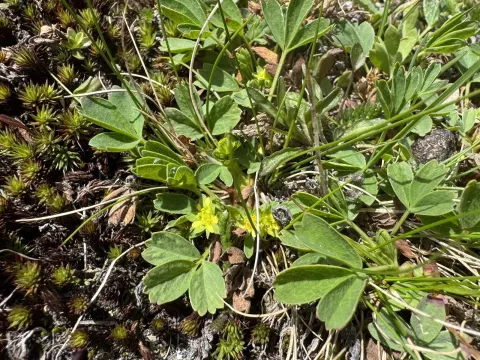
Sibbaldia procumbens
Sibbaldia procumbens
Sibbaldia procumbens is a perennial herbaceous plant belonging to the Rosaceae family. It is a prostrate species, known for its ability to thrive in extremely harsh environments such as arctic tundras and high-mountain zones.
What the section contains
Sibbaldia procumbens
The plant exhibits a creeping growth habit with trifoliate leaves and small, inconspicuous yellowish or greenish flowers. Its compact structure is an evolutionary adaptation that protects the plant from freezing temperatures and desiccating winds.
In terms of distribution, this species is circumpolar, frequently encountered on rocky ridges, mountain slopes, and gravelly moraines where soil depth is minimal and temperatures remain low for the majority of the year.
Cultivation requires conditions that mimic its natural mountain habitat. Specifically, the plant needs well-draining, gritty, or rocky soils with moderate moisture. It generally fails to thrive in heavy, nutrient-rich, or waterlogged clay soils.
Economic and horticultural use is primarily ornamental, focusing on rock gardens or alpine collections. Its low profile and resilience make it an excellent ground cover for challenging, sun-exposed, and stony garden features.
The primary threats to the health of Sibbaldia procumbens in gardens include fungal infections such as root rot and leaf spot. These are usually triggered by poor drainage or stagnant air conditions surrounding the foliage.
Soil-borne pests and larvae can occasionally cause damage to the crown of the plant. Since the plant has a slow growth rate, any structural damage to the root system significantly hinders its ability to recover and survive the winter.
Heat stress is another critical threat. When exposed to prolonged high temperatures combined with high humidity, the plant may experience physiological decline, leading to increased susceptibility to secondary pathogens.
Preventive maintenance involves ensuring the site is open and airy, allowing for rapid drying after precipitation. Avoid overcrowding to maintain proper circulation and minimize the risk of spreading fungal spores.
Integrated management should prioritize maintaining the integrity of the root zone and applying targeted control measures only when necessary, as the plant may be sensitive to certain harsh chemical fertilizers or concentrated pesticides.