
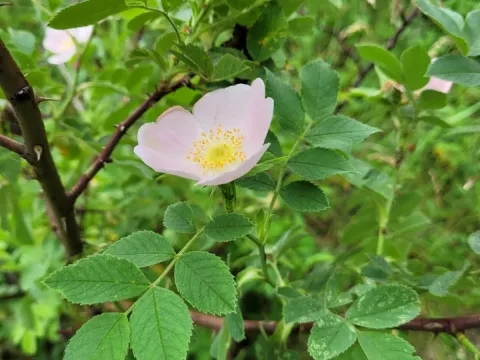
Hairy dog rose
Rosa caesia
Rosa caesia, commonly known as the hairy dog rose, is a perennial shrub belonging to the Rosaceae family. It is distinct for its greyish-green foliage covered in fine pubescence, which serves as a natural adaptation to dry and exposed environments.
What the section contains
Hairy dog rose
Native to various parts of Europe and Western Asia, this species is typically found in diverse habitats including woodland edges, scrublands, and limestone-rich slopes. Its ability to tolerate nutrient-poor soils makes it a robust candidate for restoration projects.
The plant thrives in full sun but can tolerate partial shade, provided the soil remains well-drained. It is highly valued for its hardiness, surviving cold winters and adapting well to various temperate climatic conditions without requiring specialized shelter.
Botanically, Rosa caesia features a strong root system that aids in soil stabilization. Its flowers are generally pale pink to white, appearing in the early summer, followed by the development of nutrient-rich rose hips that serve as a source of food for local wildlife.
Cultivation requirements are minimal compared to garden roses. Routine maintenance involves pruning dead or crossing branches in early spring to encourage airflow and light penetration, ensuring the long-term health and vitality of the shrub.
The primary health threats for Rosa caesia include fungal infections such as powdery mildew and black spot. These pathogens thrive in high humidity and poor air circulation, often manifesting as spots or white coatings on the leaves.
Pests, particularly aphids, rose sawflies, and spider mites, are known to attack the tender growth of the plant. If left untreated, severe infestations can stunt the plant's growth and reduce the quality of the foliage.
Proactive management is key to successful cultivation. Providing adequate spacing between plants is the most effective cultural method to prevent the spread of diseases and maintain a healthy microclimate around the shrub.
Sanitation is equally critical. Removing and disposing of infected fallen leaves prevents the overwintering of pathogens, thereby reducing the inoculum pressure for the following growing season.
When chemical or biological intervention is required, it is essential to apply treatments during early stages of infestation. Careful monitoring and identifying symptoms early significantly minimize the need for heavy pesticide usage.