
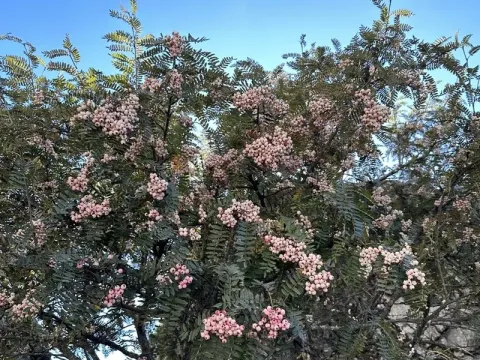
Wallich mountain ash
Sorbus wallichii
Wallich mountain ash (Sorbus wallichii) belongs to the Rosaceae family. It is a deciduous tree or large shrub native to the high-altitude regions of the Himalayas, including areas in India, Nepal, and Bhutan.
What the section contains
Wallich mountain ash
The plant prefers a moderately cool climate with sufficient levels of humidity. It adapts well to conditions typical of mountain forests, where high atmospheric humidity and moderate summer rainfall are common.
For successful growth, the crop requires well-drained, fertile loamy or sandy soils with a neutral to slightly acidic pH level. Stagnant moisture in the root zone is highly undesirable, as it may lead to root rot and systemic health decline.
The species is highly valued for its ornamental features, including pinnate foliage that turns vibrant colors in autumn, and striking fruit clusters. In cultivation, it is important to provide sufficient light, although partial shade is preferred in regions with hot summers.
The primary horticultural use of Sorbus wallichii is ornamental. It is planted in landscape designs, parks, and arboretums as a specimen tree or in group plantings, appreciated for its exotic appearance and hardiness in suitable climate zones.
Major threats to the crop's health include fungal diseases such as scab and leaf rust, which thrive under conditions of high humidity and poor air circulation. Regular sanitary pruning is essential to improve airflow through the canopy.
Pests posing the greatest risk include leaf-chewing insects, such as caterpillars of the rowan moth and various aphid species that target young shoots during the active growth phase in spring.
Disease prevention involves adhering to proper cultivation standards, timely removal of damaged branches, and the application of fungicides during the spring season if heavy fungal infestation occurs.
Damage to the root system by larvae of soil pests, such as the May beetle, necessitates the use of insecticides in the root zone when signs of plant stress or stunted growth are detected.
Overall, when provided with the correct site selection and proper maintenance, the Wallich mountain ash is a relatively resilient species that does not require constant or intensive human intervention.