
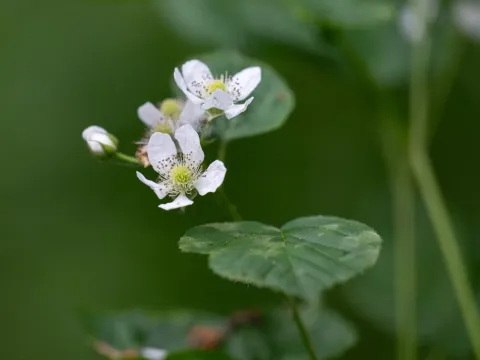
Ness blackberry
Rubus nessensis
The Ness blackberry (Rubus nessensis) is a perennial shrub belonging to the Rosaceae family. It is native to various European regions, typically found in woodland habitats and hedge corridors.
What the section contains
Ness blackberry
This plant thrives in moist, fertile soils that are rich in organic matter. It prefers sites with good drainage, as waterlogged soil can lead to root system issues.
In terms of light, the Ness blackberry performs best in sunny positions but demonstrates notable tolerance for partial shade, which is consistent with its wild origins.
The climate requirements include a temperate environment where the plant can experience winter dormancy, which is necessary for productive flowering in the spring.
Proper agricultural practice involves providing trellis systems to manage the long, arching canes, ensuring easier maintenance and promoting better fruit production.
Common diseases affecting this species include cane blight and various fungal leaf spots, which often proliferate in humid and poorly ventilated conditions.
Pests such as aphids and raspberry beetles frequently target the emerging buds and ripening fruit, causing potential damage to the seasonal crop.
Mitigation strategies include implementing systematic pruning to remove old and diseased canes, which enhances air circulation throughout the shrub.
Rust fungus can be managed by removing and destroying symptomatic leaves immediately, coupled with preventative biological treatments during the growing season.
Monitoring the plant for spider mites is crucial during hot, dry spells, as these pests can cause premature leaf drop and weaken the entire plant.
Harvesting the Ness blackberry typically occurs from late July through August, when the berries reach full maturity and display a deep, dark color.
The berries are delicate and must be handled with care. Hand-picking is the preferred method to maintain the structural integrity of the individual drupelets.
Since the berries do not ripen all at once, growers must harvest multiple times throughout the season to collect the fruit at the peak of sweetness.
Post-harvest, the berries should be cooled immediately to extend their shelf life, as they are prone to rapid softening and fermentation at room temperature.
The fruit has diverse culinary uses, including fresh consumption, jelly making, and processing into beverages or natural food coloring agents.