
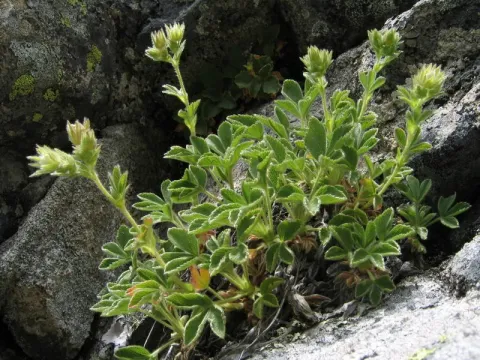
Narrow-petaled cinquefoil
Potentilla grammopetala
Potentilla grammopetala, known as the narrow-petaled cinquefoil, is a perennial herbaceous plant belonging to the diverse Rosaceae family.
What the section contains
Narrow-petaled cinquefoil
This species is native to alpine environments, primarily found in mountainous regions where it thrives in rocky crevices and limestone-rich soils, showcasing its resilience in harsh climatic conditions.
For successful cultivation, it requires a location with full sun exposure. Inadequate light levels often lead to spindly growth and a significant reduction in the plant's natural flowering capacity.
The soil must provide excellent drainage, as moisture accumulation around the root collar can lead to rapid decay. Preferring neutral to alkaline conditions, it adapts well to gravelly substrates.
Its primary agricultural and horticultural value lies in its decorative potential. It is highly sought after for alpine gardens, rockeries, and xeriscaping projects due to its compact habit.
The main threats to Potentilla grammopetala cultivation are fungal diseases, which are typically triggered by improper water management or poor site selection.
Root rot is the most common issue, often resulting from heavy, waterlogged soils that lack the necessary porosity for oxygen exchange in the root zone.
Aphids represent the primary insect pest risk. These insects feed on the sap of young tissues, which can stunt the plant's development if not managed promptly.
Powdery mildew may occur during periods of high humidity and poor air circulation, necessitating the use of systemic fungicides and improved spacing between plants.
Nematodes, while less frequent, can be a significant threat in contaminated soil, requiring strict sanitation and removal of affected plants to protect surrounding garden areas.