
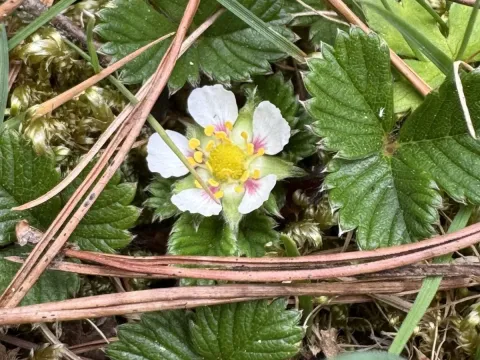
Nilgiri strawberry
Fragaria nilgerrensis
The Nilgiri strawberry is a perennial herbaceous plant belonging to the Rosaceae family, naturally found in the mountainous regions of Asia.
What the section contains
Nilgiri strawberry
In cultivation, propagation can be achieved through seeds, which require stratification to mimic winter conditions and ensure high germination rates.
When sowing, seeds should be placed on the surface of the soil, as they require light to germinate effectively and should not be covered deeply.
It is essential to maintain high humidity levels using a cover during the early stages of seedling development until the first true leaves appear.
Temperature control is vital during the initial growing phase, with a range of 18–22 degrees Celsius being optimal for seedling establishment.
This species thrives in a climate that is cool, humid, and mountainous, reflecting its native habitat in the Himalayas and surrounding areas.
Partial shade is necessary to protect the foliage from intense heat and direct sunlight, which can quickly dehydrate the plants.
The soil should be rich in organic matter, slightly acidic, and well-draining to prevent root issues caused by waterlogging in the growing zone.
Regular irrigation is required, as the Nilgiri strawberry is sensitive to dry soil conditions, especially during the active flowering and fruit-setting phases.
Mulching the plants with organic materials helps preserve soil moisture and protects the root system from extreme fluctuations in ground temperature.
The Nilgiri strawberry is highly valued for its unique flavor profile, which often features exotic notes reminiscent of peaches or pineapples.
While the yield is generally modest compared to modern commercial cultivars, the fruits are highly appreciated for their sensory properties.
The berries usually exhibit a pale white to pinkish color upon ripening, which is a characteristic feature of this botanical species rather than a sign of immaturity.
Beyond fresh consumption, these berries are suitable for culinary processing, where their subtle but distinct aroma can be preserved in jams and desserts.
Ongoing research into this species explores its genetic traits to improve disease resistance in contemporary strawberry breeding programs.
Common issues for the Nilgiri strawberry include leaf spot diseases, which typically develop in conditions of high humidity and poor air circulation.
Root rot is a significant risk if the soil lacks proper drainage, making the plant vulnerable to fungal pathogens that thrive in consistently damp environments.
Spider mites can be a problematic pest, especially during dry spells, feeding on the leaves and causing chlorosis and a decrease in plant vigor.
To maintain a healthy crop, growers should implement preventive measures, such as ensuring adequate spacing between plants to improve airflow.
Regular monitoring for early signs of disease and the prompt removal of infected leaves can prevent the spread of pathogens throughout the patch.
The harvest season for this variety is typically focused in the middle of summer, depending on the local environmental conditions and altitude.
Berries should be harvested carefully by hand to avoid bruising the soft fruit, which is quite delicate compared to larger, firmer strawberry varieties.
Early morning harvests are recommended to take advantage of cooler fruit temperatures, which improves the overall shelf life after picking.
Using small, shallow containers helps prevent the fruit from being crushed by its own weight, ensuring the berries reach the consumer in good condition.
Continuous harvesting promotes further development of existing blossoms, helping to extend the period of production during the growing season.