
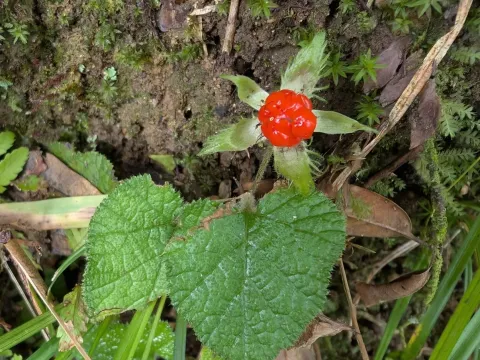
Rubus buergeri
Rubus buergeri
Rubus buergeri is a species of flowering plant belonging to the Rosaceae family. This plant is recognized as a trailing, evergreen shrub, often used for ground cover in specialized botanical collections.
What the section contains
Rubus buergeri
Native to East Asia, including Japan and Korea, it naturally thrives in woodland environments. It is adapted to shady, humid habitats with cool temperatures, making it a sensitive species in terms of site selection.
The cultural requirements dictate a preference for well-drained, nutrient-rich, and slightly acidic soils. The plant relies on high organic matter content to sustain its perennial growth and leaf development.
Light levels should be carefully managed; Rubus buergeri performs poorly under direct sun, which can dehydrate its foliage. A position in partial shade or beneath the canopy of larger shrubs is ideal for successful establishment.
Water management is critical during the growing season. The soil must remain consistently moist but not waterlogged, as poor drainage is the primary cause of root failure in this specific variety.
Aphids are the most common insect pests that infest the tender new growth of Rubus buergeri. Early detection and the use of horticultural oils can significantly mitigate the potential damage caused by these sap-sucking insects.
Powdery mildew represents the most frequent fungal threat, particularly in humid and stagnant air conditions. Improving airflow through selective pruning and maintaining proper spacing between plants is essential for prevention.
Root rot is often associated with heavy soils or excessive moisture during winter dormancy. If the soil remains saturated for long periods, the roots will quickly succumb to opportunistic fungi, leading to plant death.
Anthracnose may occur in wet, humid summers, manifesting as necrotic spots on the leaves and stems. Regular removal of fallen leaves and debris is recommended to minimize the pathogen load in the garden environment.
Spider mites can be problematic during dry spells. These pests typically congregate on the underside of leaves, causing yellowing and premature leaf drop if they are not treated with adequate humidity or acaricides.