
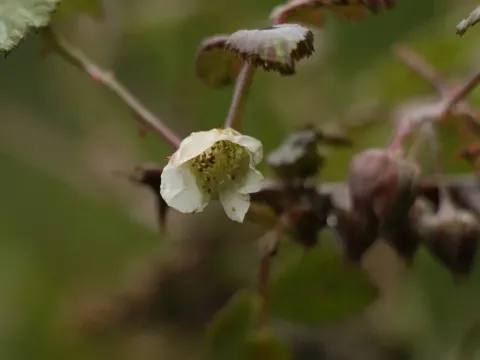
Rubus biflorus
Rubus biflorus
Rubus biflorus, commonly known as the white-stemmed blackberry, belongs to the Rosaceae family. Native to the Himalayas and Western China, this shrub is highly valued for its striking white-waxy stems that provide a unique visual appeal, especially during the dormant season.
What the section contains
Rubus biflorus
The plant thrives in cool, temperate climates and requires a position with partial shade or full sun, provided the soil moisture is consistent. Direct, intense sunlight in hot regions can sometimes damage the delicate waxy bloom on the stems, so strategic planting is recommended.
For optimal development, Rubus biflorus requires fertile, well-draining soil that is rich in organic matter. While it prefers neutral to slightly acidic pH levels, it is generally adaptable to various soil types, provided that waterlogging is strictly avoided.
Agricultural management includes annual pruning, which is essential to encourage the growth of new canes. Since the most striking white bloom is found on new wood, removing old, spent canes is necessary to maintain the plant's ornamental quality.
While the fruit is edible, its taste is often considered bland compared to domestic blackberries, leading to its primary status as an ornamental plant rather than a commercial crop for berry production.
The plant is susceptible to common bramble diseases, including rust and fungal leaf spots, which can thrive if the foliage remains wet for extended periods.
Pests such as aphids and spider mites can be problematic, especially in dry weather conditions, feeding on the undersides of leaves and reducing plant vigor.
Maintaining adequate spacing between plants is crucial to ensure proper air circulation, which significantly reduces the risk of fungal infections and mildew outbreaks.
Sanitation practices, such as clearing leaf litter from around the base of the plant in late autumn, help minimize the overwintering of pathogens and harmful insects.
In cases of severe infestation, using dormant oil sprays or specialized fungicides can help protect the aesthetic appearance of the decorative stems during the early spring season.