
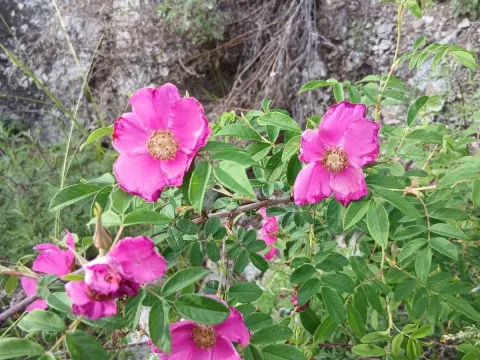
Dahurian rose
Rosa davurica
The Dahurian rose (Rosa davurica) is a deciduous shrub belonging to the Rosaceae family. It is native to Eastern Asia, with a primary distribution range across the Russian Far East, Siberia, Mongolia, and northern China, where it thrives in diverse ecosystems such as forest fringes and riverbanks.
What the section contains
Dahurian rose
This species is well-known for its exceptional winter hardiness and tolerance to extreme climatic fluctuations. It prefers fertile, well-drained loamy soils but displays high adaptability to various soil types, provided that there is no excessive water stagnation in the root zone.
Botanically, the plant grows as a shrub reaching up to 1.5 meters in height. Its branches are typically characterized by a reddish hue and are covered with paired, slender prickles. The leaves are imparipinnate, consisting of several leaflets that exhibit slight pubescence on the underside, which is a distinguishing feature of this species.
For agricultural cultivation, the Dahurian rose requires open, sunny locations with protection from strong prevailing winds. While it is hardy, optimal growth and fruit production are achieved through regular soil aeration and the application of organic matter to improve soil structure.
Agrotechnical care involves basic maintenance such as pruning old or damaged wood to maintain plant vigor. While the plant is drought-tolerant once established, moderate irrigation during the fruit-set phase is highly recommended to maximize the quality and size of the hips.
The primary threats to Rosa davurica include fungal infections like powdery mildew, particularly in environments with high humidity and poor ventilation. Proper spacing and airflow management are essential preventive measures to maintain plant health throughout the growing season.
Pests such as rose aphids and spider mites can occasionally affect the foliage, causing stress to the shrub. Regular monitoring of the leaves allows for early detection, enabling the use of integrated pest management strategies to minimize chemical dependence.
Sanitation practices are vital for disease prevention. This includes the removal and destruction of fallen leaves and infected plant debris in the autumn, as these materials frequently harbor the overwintering stages of various pathogens and insect pests.
In commercial plantations, if pest populations reach economic thresholds, selective systemic insecticides may be employed. However, strict adherence to harvest intervals is crucial, especially when the fruit is intended for medicinal or pharmaceutical applications.
Overall, the Dahurian rose exhibits strong natural resistance to common rose diseases. By ensuring the plant remains healthy through proper site selection and balanced nutrition, the need for intervention is greatly reduced, promoting a sustainable production system.
The economic focus of Dahurian rose cultivation is the production of hips, which are highly valued for their high concentrations of ascorbic acid and other bioactive compounds. Harvest takes place once the hips reach maturity, indicated by a deep red color.
Timing the harvest is critical; it must be completed before the first severe frosts. Frost damage can degrade the vitamin content and alter the biochemical structure of the fruit, making them unsuitable for high-quality medicinal exports or processing.
Post-harvest processing involves rapid drying to stabilize the produce. Industrial dryers are used to maintain a constant temperature, typically between 60 and 80 degrees Celsius, ensuring that the moisture content is reduced to levels that prevent mold while preserving nutrients.
The processed fruit is widely utilized in the food and pharmaceutical industries. It serves as a key raw material for vitamin supplements, health teas, herbal extracts, and syrups, all aimed at supporting immune function and overall well-being.
Beyond its pharmacological use, the Dahurian rose is an excellent candidate for environmental landscaping and soil stabilization. Its robust root system and tolerance to adverse conditions make it an effective choice for preventing erosion on slopes and restoring degraded landscapes.