
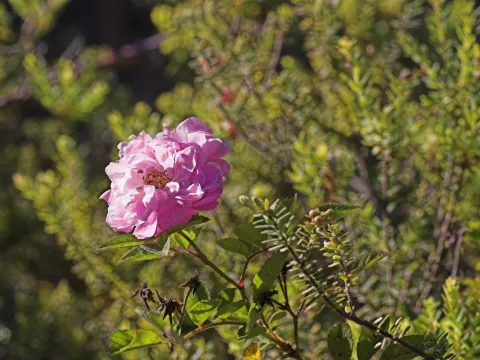
Damask rose
Rosa bifera
Damask rose (Rosa bifera) is a shrub species belonging to the Rosaceae family. It is a historic hybrid, famously known for its high content of essential oils and its long-standing importance in the perfume industry.
What the section contains
Damask rose
The plant thrives in well-drained, fertile soil with a neutral to slightly acidic pH. Sunlight is critical for flowering, so the plantation must be located in an open, sunny area protected from harsh winds.
Climate requirements include distinct seasonal changes, as the plant needs a dormant period in winter to prepare for the spring vegetative growth. Moderate rainfall during the growing season is preferred for optimal biomass production.
Agronomic practices involve annual pruning to remove old wood, which stimulates the growth of new, flower-bearing shoots. Mulching and organic fertilization are essential to maintain soil structure and moisture balance.
Economically, this culture is cultivated for the extraction of rose oil and rose water. The industry demands consistent quality, which is achieved through specific agricultural management and sustainable farming practices.
Powdery mildew is a prevalent fungal disease that thrives in high humidity. Proper spacing between plants is essential to ensure air circulation and reduce the risk of outbreaks throughout the plantation.
Rose rust, caused by fungal pathogens, can severely damage the foliage, leading to premature leaf drop. Management involves removing infected leaves and applying copper-based fungicides when necessary.
Aphids are the most common insect pest, clustering on young buds and shoots. Integrated pest management strategies, including the use of beneficial predatory insects, are highly recommended to control their population.
Spider mites often attack the plants during hot, dry summer months. Regular water irrigation helps to suppress mite development and keeps the plants healthy and resistant to infestation.
Leaf-rollers and various beetles can negatively impact the yield. Regular field inspections and monitoring are vital to prevent large-scale damage that could lead to financial losses for producers.
Harvesting Damask rose petals is a meticulous process that must be performed in the early morning hours. This timing is crucial as it ensures the peak concentration of essential oils is captured.
As the day progresses and temperatures rise, the volatile oils evaporate, significantly reducing the quality of the harvested material. Therefore, pickers must work quickly before the intense sunlight hits the field.
The petals are hand-picked with care to avoid bruising. Damaged flowers ferment quickly, which ruins the fragrance and lowers the value of the essential oil extracted during the distillation process.
Logistics are key to post-harvest success. The raw material should be transported in crates that allow for ventilation, preventing heat buildup before it reaches the processing facility.
Efficient management of the harvest cycle ensures higher economic returns. A well-maintained Damask rose plantation can be highly productive for several years, provided the agronomic standards are met.