
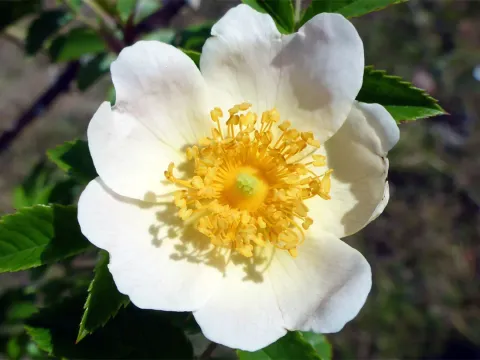
Long-styled rose
Rosa stylosa
The long-styled rose (Rosa stylosa) belongs to the Rosaceae family. It is a deciduous shrub native to Europe and North Africa, typically found in hedges, scrub, and woodland edges, demonstrating a high degree of adaptability to various natural environments.
What the section contains
Long-styled rose
Its botanical identity is defined by its distinct flowers, where the styles of the carpels are fused into a long column that protrudes from the hypanthium. The shrub displays arching stems and delicate, often white to pale pink flowers.
To cultivate this species effectively, it requires a position in full sun or light shade. It is quite versatile regarding soil types, but thrives best in deep, well-drained loam that maintains sufficient moisture throughout the growing season.
The climate requirements for the long-styled rose are moderate. It is well-suited for temperate regions, showing good frost resistance and the ability to endure periods of dry weather once the root system is established.
Standard agrotechnical practices for this rose include pruning to remove dead or diseased wood during the dormant season, which encourages vigorous growth and maintains the shrub's aesthetic structure in landscape settings.
Like many species in the genus Rosa, the long-styled rose is susceptible to common fungal diseases, such as powdery mildew, black spot, and rust, which often appear during damp and humid weather conditions.
Pests that frequently infest these plants include rose aphids, spider mites, and various types of leaf-eating caterpillars. These can compromise plant vigor and reduce the overall floral display.
Maintaining high hygiene in the garden is essential to prevent the spread of diseases. Clearing away fallen leaves and ensuring sufficient spacing between plants helps to reduce humidity levels around the foliage.
Early intervention is crucial when dealing with infestations. Using horticultural oils or recommended systemic insecticides can help manage pest populations without damaging the ecosystem.
Regular inspections throughout the spring and summer months allow gardeners to identify early signs of stress or infection, ensuring the long-term health and vitality of the shrub.