
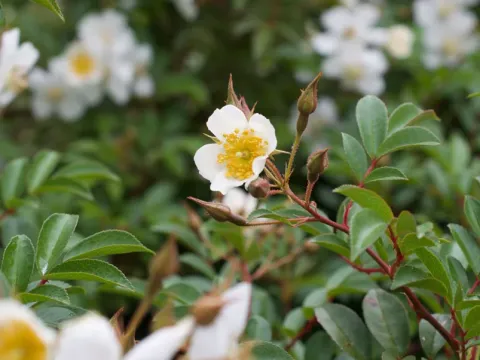
Long-cusp rose
Rosa longicuspis
The long-cusp rose is an impressive climbing species belonging to the Rosaceae family. Known for its vigorous growth habit, it can climb several meters high, utilizing its sharp thorns to attach to trellises and supportive structures.
What the section contains
Long-cusp rose
Originating from the mountainous regions of China, this species thrives in climates that mirror its native habitat. It prefers temperate zones with mild winters, as severe frost can damage the long, flexible stems of the plant.
In terms of soil requirements, it demands a deep, well-draining loam rich in organic matter. A slightly acidic to neutral soil pH is ideal for nutrient uptake, and the planting site should be chosen to provide ample space for its expansive growth.
Cultivation practices involve regular pruning to maintain the plant's health and structure. Removing dead or crossing branches ensures better airflow and sunlight penetration, which are critical for reducing the risk of fungal infections within the dense foliage.
Watering management is essential, especially during the first years of establishment. Mulching around the base helps retain moisture in the soil, suppresses weeds, and protects the root system from extreme temperature fluctuations.
Like other members of the genus Rosa, the long-cusp rose is susceptible to various fungal pathogens. Powdery mildew is common in humid environments, causing a white, powdery appearance on the leaves and eventually leading to leaf drop.
Black spot is another significant disease that affects the plant's aesthetic value and overall vigor. It is characterized by dark spots on the foliage and requires prompt removal of affected material to prevent the spread of spores.
Aphids represent the primary insect pest, often clustering on the soft, succulent growth of new buds. They weaken the plant by sucking nutrients, and their honeydew secretions can lead to the growth of sooty mold.
Spider mites can also become problematic during prolonged periods of hot, dry weather. They cause fine webbing and stippling on the leaves, which can lead to significant defoliation if left untreated.
- Systematic application of fungicides.
- Encouraging beneficial insects in the garden.
- Maintaining optimal plant spacing.
- Cleaning up fallen leaves in the autumn.