
Loquat
Eriobotrya Lindl.
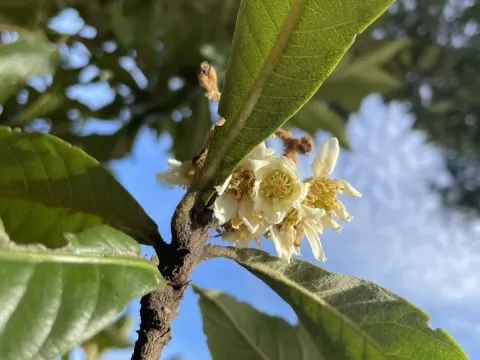
The loquat (Eriobotrya japonica) belongs to the Rosaceae family. It is an evergreen tree or shrub that begins its vegetation period in early spring, while flowering occurs in late autumn or winter, making it a unique species among subtropical fruit trees.
What the section contains

Loquat
Propagation is primarily carried out through seeds or vegetative methods, such as budding on loquat, quince, or hawthorn rootstocks. Seed propagation often leads to the loss of desirable varietal traits, which is why grafted saplings are preferred for commercial orchards.
Planting in open ground is typically done in the spring, after the risk of frost has passed, or in the autumn in regions with mild climates. Trees should be spaced at least 5-6 meters apart to ensure proper crown aeration and light penetration.
Young plants require regular watering during their first two years of growth to ensure successful establishment. It is also crucial to provide shading for young saplings during the initial adaptation period after transplanting.
Formative pruning is essential for establishing a strong tree framework. Since the loquat flowers on the tips of the current season's shoots, heavy pruning should be avoided to prevent significant yield reductions; minimal intervention is the best practice.
As a subtropical crop, the loquat has strict temperature requirements. The optimal temperature for vegetative growth is between 18 and 25 degrees Celsius, while short-term dips below -10 or -12 degrees can be fatal for generative buds.
Soils for loquat cultivation must be fertile, well-drained, and have a neutral to slightly acidic pH. Waterlogged areas and heavy clay soils with high water tables are completely unsuitable for the healthy development of this tree.
Loquats are light-loving plants and require well-lit sites protected from cold northern winds. Growth rates significantly decline in shaded areas, and both the quality and quantity of the fruit are drastically reduced under such conditions.
The application of organic and mineral fertilizers is vital for maintaining productivity. Nitrogen-rich fertilizers are recommended in early spring to stimulate growth, while potassium and phosphorus blends are essential during the fruit-ripening stage.
Consistent watering is critical during the fruit-set stage and throughout extended drought periods. However, excessive moisture during the autumn and winter months can lead to root rot and other fungal diseases.
Seed-grown trees typically begin bearing fruit at 5-8 years of age, whereas grafted trees usually start producing in their 3rd or 4th year. A healthy tree can remain in full, stable production for up to 20–25 years.
Yields vary greatly depending on the cultivar, specific seasonal climatic conditions, and the level of horticultural management. On average, a mature tree can produce between 30 and 70 kilograms of juicy fruit per season.
Loquat fruits are rich in vitamins A, C, B6, as well as potassium and various antioxidants. They are highly prized for fresh consumption and are widely used in the production of jams, compotes, jellies, and even artisanal liqueurs.
Breeding programs focus on developing large-fruited varieties with minimal seed content and high sugar levels. Different varieties have varying maturity dates, which allows for a staggered supply chain throughout the harvesting season.
Commercial utilization requires careful logistics, as the thin skin of the fruit makes it prone to mechanical damage during transport. Packing the fruit in specialized trays is essential to maintain quality and extend shelf life.
Fire blight (Erwinia amylovora) is the most serious threat to loquat plantations. Infections cause branches to blacken and wither, requiring immediate pruning and destruction of affected parts to prevent further spread.
Fungal infections, such as scab and anthracnose, often affect leaves and fruit in humid environments. Preventative measures include copper-based fungicide applications during the dormant phase of the tree.
Pests like aphids and various scale insects are common problems, as they feed on the sap of young shoots and foliage. Heavy infestations can weaken the tree and reduce its overall cold resistance significantly.
The Mediterranean fruit fly poses a major threat to yields by laying eggs in ripening fruit. Effective control strategies include the use of pheromone traps and the diligent removal and disposal of fallen fruit from the orchard floor.
The presence of ants on the tree is often an indicator of aphid activity, as they feed on the honeydew produced by the insects. Integrated pest management should focus on eliminating both the pests and the environmental factors that encourage them.
Harvesting loquats is a phased process because the fruits within a cluster do not ripen simultaneously. Optimal ripeness is indicated by a vibrant yellow or orange skin color and a characteristic, sweet fragrance.
The fruit is extremely delicate and should be picked by hand with the stem attached to avoid skin damage. Since underripe fruit does not continue to ripen significantly after being picked, timing the harvest correctly is essential.
The best time to harvest is during the early morning hours while air temperatures are still low. This helps maintain the fruit's turgor and significantly increases its storage life in refrigerated environments.
After picking, the fruit should be sorted by size and visual quality. Removing damaged or defective fruit is necessary, as a single rotting piece can rapidly spread spoilage to the rest of the batch in humid conditions.
Harvested loquats are best stored at temperatures between 0 and 5 degrees Celsius. Under proper temperature management, the fruit's visual appeal and flavor can be preserved for approximately 10 to 14 days.