
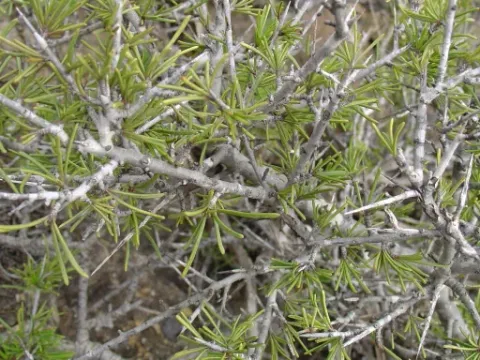
Lycium-like plum
Prunus lycioides
Prunus lycioides, commonly known as the Lycium-like plum, belongs to the diverse Rosaceae family. It is a distinct species recognized for its resilience and unique morphological adaptations to harsh environments.
What the section contains
Lycium-like plum
The native range of this species extends across the arid regions of Western Asia. It has evolved to thrive in rocky, semi-desert landscapes where water scarcity and extreme temperature fluctuations are the primary environmental stressors.
Botanically, it is a dense, thorny shrub. The presence of spines on the branches is a key survival strategy, which helps the plant mitigate grazing pressure while maintaining a compact growth habit in nutrient-poor environments.
It has modest soil requirements, favoring well-drained, alkaline, or stony substrates. Its deep and extensive root system allows it to access water and minerals where other stone fruit species would struggle to survive.
In agricultural practice, its primary value lies in its potential as a rootstock. Due to its drought tolerance and general hardiness, it serves as an excellent genetic resource for breeding programs aiming to adapt plums to marginal lands.
While highly robust, the species is susceptible to diseases common to the genus Prunus. Fungal infections, particularly during unseasonably wet periods, may affect its foliage and young shoots if air circulation is insufficient.
Pest pressure mainly comes from opportunistic insects like aphids or wood-boring beetles. However, because of its evolutionary history, Prunus lycioides generally exhibits greater resistance to these threats than commercial stone fruit varieties.