
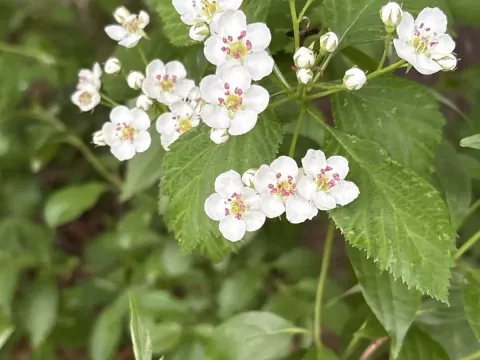
Long-spined hawthorn
Crataegus macracantha
Long-spined hawthorn (Crataegus macracantha) is a member of the Rosaceae family. It is a deciduous shrub or small tree noted for its exceptionally long, sharp thorns which can reach lengths of up to 12 centimeters.
What the section contains
Long-spined hawthorn
Native to North America, this species is well-adapted to various habitats, including forest edges and open fields. It is widely recognized for its high ecological resilience and ability to thrive in diverse soil conditions.
The plant performs best in full sun but tolerates partial shade. It requires well-drained soil and shows significant drought tolerance once fully established, making it a low-maintenance option for landscaping.
In terms of soil, it prefers loam, but is capable of growing in a wide range of types, provided they are not waterlogged. Proper site preparation during planting is crucial for long-term health.
The primary use of this species is in protective hedge planting, erosion control, and ornamental gardening where its seasonal beauty and defensive structure are highly valued.
Common diseases affecting the species include powdery mildew and cedar-hawthorn rust. Maintaining air circulation around the plant is essential for reducing the risk of fungal infections in humid environments.
Pests such as aphids, scale insects, and various leaf-feeding larvae may occasionally cause damage. Integrated pest management practices are recommended to minimize the impact on the plant's aesthetic and biological health.
Pruning should be performed during the dormant season to remove dead or diseased wood. This practice not only keeps the plant healthy but also promotes denser growth, which is desirable for hedging.
Monitoring the plant for signs of stress, such as yellowing leaves or wilting, is important. Early detection of issues allows for targeted treatment and prevents the spread of pathogens to neighboring plants.
Given the plant's robust nature, it is generally resistant to most common environmental stressors if planted in suitable zones with adequate spacing to ensure good light and airflow.