
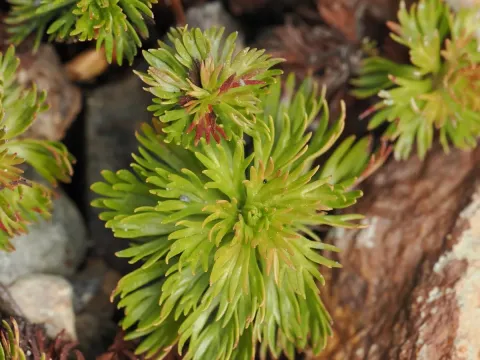
Luetkea
Luetkea
Luetkea is a genus of plants in the Rosaceae family, represented by the species Luetkea pectinata, commonly known as partridgefoot. This low-growing, mat-forming perennial is a characteristic inhabitant of high-elevation meadows and rocky slopes in western North America.
What the section contains

Luetkea
Botanically, it is classified as a subshrub, reaching only a few inches in height but spreading through creeping woody stems. The leaves are deeply dissected, giving them a fern-like texture that remains evergreen in many climates, contributing to its aesthetic appeal throughout the year.
The plant thrives in cool, moist environments with well-drained, acidic to neutral soil. Its natural adaptation to mountainous habitats makes it an excellent candidate for rock gardens, scree beds, or alpine troughs where soil conditions mimic those of high altitudes.
Requirements for successful growth include a location with partial to full sun, provided the environment is cool. In regions with very hot summers, afternoon shade is essential to prevent physiological stress and wilting, as the plant is not heat-tolerant.
Soil management is critical for the survival of Luetkea. It requires a substrate that stays moist but never waterlogged. Adding grit or sand to the soil mix ensures proper aeration and drainage, which protects the root system from fungal pathogens and decay.
Luetkea is exclusively utilized for ornamental purposes in horticulture. It is highly valued by rock garden enthusiasts for its ability to soften the hard edges of stone features and its attractive white, spike-like inflorescences that bloom during the summer months.
There is no agricultural harvest cycle for this plant as it does not produce edible fruits or crops of economic value. Its primary function is to serve as a ground-stabilizing and aesthetic plant in specialized gardening projects and landscape design.
Care of the plant involves minimal pruning, primarily consisting of removing spent flower stalks after the blooming season to maintain a tidy appearance. Propagation is generally achieved through division or stem cuttings, which should be handled during the cooler, active growth phases of spring.
Maintenance is low, provided the environmental needs are met. Unlike intensive crops, Luetkea requires little fertilization, as it is adapted to nutrient-poor soils. Excessive nitrogen can lead to succulent, weak growth that is more susceptible to environmental stressors.
Threats to the plant are minimal under optimal conditions, but it can be susceptible to root rot in heavy, wet soils. Keeping the crown of the plant dry and ensuring excellent airflow around the foliage are the best preventative measures against pests and disease outbreaks.