
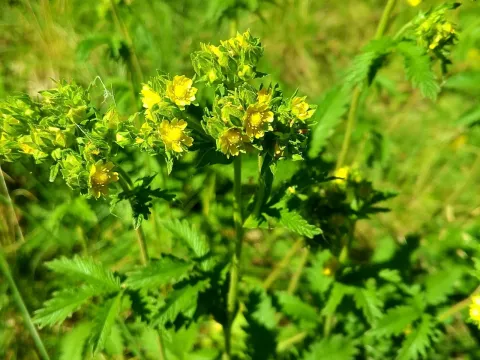
Long-leaved cinquefoil
Potentilla longifolia
The long-leaved cinquefoil (Potentilla longifolia) is a herbaceous perennial plant belonging to the Rosaceae family. It is native to regions of Central and East Asia, where it thrives in harsh environments such as arid mountain slopes, dry meadows, and sandy terrains.
What the section contains
Long-leaved cinquefoil
The plant features robust, erect stems and pinnate leaves covered in dense, fine hairs. This structural adaptation, known as pubescence, significantly helps the plant retain moisture and protects it from intense solar radiation, making it highly drought-resistant.
Agricultural cultivation requires specific soil conditions, prioritizing well-drained, nutrient-poor, and airy substrates. It is essential to avoid heavy, clay-rich soils that may cause root rot. The pH level should ideally be neutral or slightly alkaline for optimal nutrient uptake.
Regarding climate, the plant is remarkably hardy, surviving freezing winters and intense summer heat with ease. It performs best in open locations where sunlight is abundant throughout the day, as insufficient light negatively impacts its growth and phytochemical production.
In terms of economic value, Potentilla longifolia is harvested for its pharmaceutical properties, including high concentrations of tannins and flavonoids. Furthermore, due to its resilient root system, it is increasingly used in ecological restoration projects to prevent soil erosion.
The primary health threats to this crop include fungal infections such as powdery mildew, which often develop during periods of high humidity or poor field ventilation. Effective disease management involves maintaining proper spacing between plants to ensure optimal airflow.
Pest threats are generally minimal but can include aphids and certain mite species that target the succulent parts of the foliage. Integrated pest management strategies, focusing on biological controls rather than harsh chemicals, are recommended to maintain the quality of the harvested biomass.