
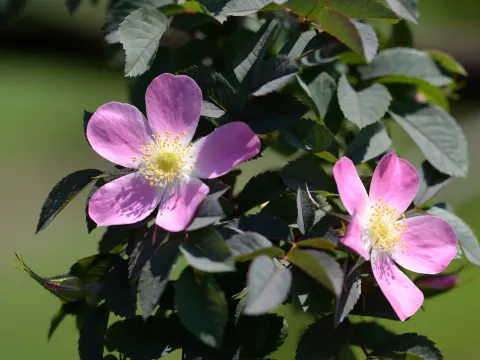
Red-leaved rose
Rosa rubrosa
The red-leaved rose (Rosa rubrifolia, commonly known as Rosa glauca) is an ornamental shrub within the Rosaceae family. It originates from the mountainous regions of Central and Southern Europe.
What the section contains
Red-leaved rose
The plant is highly valued for its striking purplish-gray foliage. To maintain this unique coloration, the shrub must be planted in full sun, as shading will result in the leaves turning a common green.
Regarding soil, the red-leaved rose thrives in well-drained loamy soils. It is quite tolerant of various pH levels but performs best in slightly acidic to neutral environments with moderate fertility.
This species is exceptionally cold-hardy, making it a reliable choice for gardens in regions with harsh winters. It does not require winter protection and is notably drought-tolerant once established.
Annual maintenance involves light pruning in early spring to remove dead wood and maintain a balanced, graceful structure, which encourages the development of vibrant new growth.
The most frequent health issues include fungal infections such as black spot and powdery mildew. These are more prevalent in areas with high humidity and poor airflow around the foliage.
Common insect pests include rose aphids and leaf-rollers. Early detection is crucial, and simple water sprays can often dislodge light aphid infestations without the need for chemicals.
Proper spacing between plants is essential to promote good air circulation, which serves as a primary preventative measure against fungal attacks.
If chemical intervention becomes necessary, integrated pest management practices should be followed to protect beneficial insects inhabiting the garden ecosystem.
Gardeners should ensure the base of the plant remains free of leaf litter during the autumn to minimize the overwintering sites for potential pathogens.