
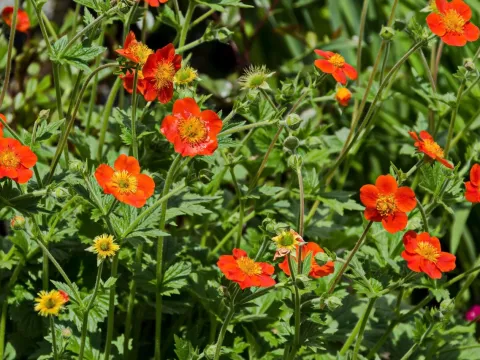
Rhaetian avens
Geum rhaeticum
Rhaetian avens is a perennial herbaceous plant belonging to the Rosaceae family. It is a slow-growing species typically found in high-altitude environments, requiring specific attention when propagating from seeds.
What the section contains
Rhaetian avens
Direct sowing in outdoor settings is most effective in late autumn. The seeds require a cold stratification period during winter to break dormancy and ensure high germination rates in the following spring.
Indoor seed starting requires sowing in a well-draining seed mix at temperatures between 15 and 18 degrees Celsius. Careful handling is necessary during the seedling stage to avoid damaging the developing taproots.
Transplanting seedlings to their final location should be done after the risk of frost has passed. Spacing is crucial to ensure that each plant receives enough sunlight and airflow to thrive in its permanent environment.
Vegetative propagation via division is also possible for established clumps. This task is best performed in the early spring, ensuring each division has healthy roots and a small crown to support rapid regrowth.
This alpine species requires a position with full sunlight to partial shade. Exposure to intense afternoon heat in lower-altitude gardens should be mitigated by providing light shading or northern-facing positions.
The soil must be light, stony, and possess excellent drainage characteristics. Heavy clay soils are unsuitable and will likely lead to root rot; therefore, soil amendment with gravel or coarse sand is highly recommended.
Nutrient requirements are relatively low compared to heavy feeders. A light application of a balanced slow-release fertilizer in early spring is sufficient to encourage healthy foliage and bloom production.
Rhaetian avens is highly cold-hardy, well-adapted to the harsh conditions of its native alpine habitat. It performs best in regions where summer nights are cool, which helps maintain the plant's overall vigor.
Water management is critical. While the plant appreciates consistent moisture during the growing season, it does not tolerate "wet feet." Ensuring the root zone does not sit in standing water is key to longevity.
The primary threats to Rhaetian avens are fungal pathogens, specifically those causing root and crown rot. These are almost exclusively associated with poor drainage and excessive humidity around the base of the plant.
Insect pests, such as aphids and spider mites, may become an issue during periods of environmental stress. Regular observation is necessary to identify infestations early before they significantly weaken the plant.
Good cultural practices act as the best defense against threats. Providing adequate spacing, avoiding overhead irrigation, and maintaining clean garden beds significantly reduce the risk of disease and pest outbreaks.
If chemical interventions are needed, localized treatment with organic fungicides or insecticidal soaps is preferred. Always apply these products early in the morning or late in the evening to avoid leaf scorching.
- Maintain high soil porosity.
- Avoid overcrowding in the rock garden.
- Remove dead foliage after the growing season.