
Rhaphiolepis
Rhaphiolepis
Rhaphiolepis is a genus of evergreen shrubs belonging to the Rosaceae family. Native to the subtropical regions of East Asia, these plants have gained popularity worldwide for their ornamental foliage and attractive, fragrant blossoms.
What the section contains


Rhaphiolepis
The plant thrives in full sun to light shade. Optimal growth is achieved in well-draining, slightly acidic to neutral soils. It is essential to ensure that the site provides adequate aeration, as the root system is sensitive to waterlogged, compacted soils.
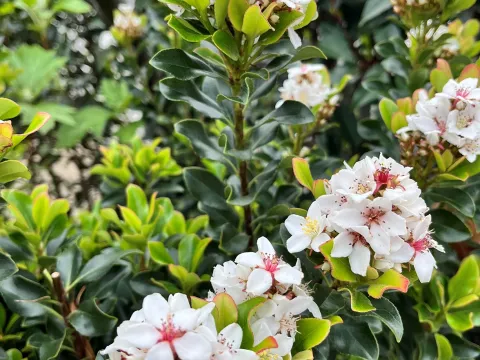
Botanically, Rhaphiolepis is characterized by leathery, dark green leaves and clusters of pink or white flowers. The plant typically exhibits a slow to moderate growth rate, making it an excellent candidate for managed landscapes and structured gardens.
Climate requirements include mild winters and moderate humidity. While mature specimens are somewhat drought-tolerant, regular irrigation is vital during the establishment phase and prolonged dry spells to maintain overall plant vigor.
In terms of usage, Rhaphiolepis is extensively used for hedge formation, foundation plantings, and container gardening. Its ability to tolerate pruning makes it a flexible choice for various architectural designs in garden layouts.
The primary pests affecting Rhaphiolepis include scale insects, aphids, and spider mites. These organisms can severely weaken the plant by feeding on leaves and stems, which often leads to stunted development.
Fungal diseases, specifically entomosporium leaf spot and powdery mildew, represent the most significant threat to plant health. Prevention strategies should prioritize maintaining adequate spacing between plants and implementing proper irrigation practices to minimize leaf wetness.