


Reference · Crops
Quince
Cydonia Mill.
Planting quince (Cydonia oblonga) is best performed during the early spring before bud break or in the late autumn, at least a month before the ground freezes. Spring planting is generally recommended for cooler regions to allow the tree to establish its root system before the first winter.
1
items
What the section contains
Marketplace
Products in this section · 12




Quince
Selecting the right site is crucial as quinces thrive in full sun and require protection from harsh winds. Adequate sunlight is essential for optimal fruit development, sugar content, and the characteristic aroma that defines the species.
Prepare the planting holes well in advance by incorporating organic matter such as compost or well-rotted manure, along with phosphorous-based fertilizers. A spacing of 4–5 meters between trees is necessary to provide sufficient room for crown development and air circulation.
While quince can be grown from seeds, it does not breed true to type, so grafting or budding onto compatible rootstocks is standard in commercial orchards. This ensures the desired fruit quality and tree vigor are consistently maintained.
Pay close attention to the depth of the root flare during planting. The graft union should remain slightly above the soil line to prevent bark rot and ensure the tree does not succumb to soil-borne pathogens common in buried trunks.
The quince tree, a member of the Rosaceae family, is native to the warm-temperate regions of the Caucasus and Central Asia. It is a hardy, long-lived woody perennial that requires a relatively long growing season to fully mature its fruit.
Quince is adaptable to a variety of soil types but prefers deep, fertile, and well-drained loams. It is known for its high tolerance to wet soil conditions, making it an excellent candidate for sites where other stone fruits might fail due to drainage issues.
Although the tree is moderately drought-tolerant once established, consistent irrigation during the fruit-set and development phases is vital. Water stress during these periods often leads to stunted fruit, reduced yield, and premature fruit drop.
Young trees require winter protection in colder climates to prevent frost damage to the trunk. Wrapping the bark or applying a thick layer of mulch around the base can protect the root system from deep soil freezing.
Balanced fertilization programs are essential for long-term health. Apply nitrogen in the spring to encourage leaf growth, while reserving potassium and phosphorous for autumn applications to harden off the wood for the upcoming winter season.
Quince trees typically begin to bear fruit 3 to 4 years after planting. Commercial yields generally start to peak once the trees reach 7 to 8 years of age, at which point the tree reaches its full productive capacity.
A single mature, healthy tree can produce between 40 and 80 kilograms of fruit per season, depending on the specific cultivar and the level of management. Intensive planting systems can reach yields of 150 to 200 quintals per hectare.
Cross-pollination is often necessary, as many cultivars are self-incompatible. Planting multiple varieties in proximity or ensuring a healthy population of local pollinators, such as honeybees, will significantly improve set rates.
Pruning is the most critical management practice for maintaining yield. By removing dead wood and thinning out the center of the canopy, growers allow sunlight to reach the inner fruit clusters, preventing biennial bearing and improving quality.
Hand-harvesting is standard due to the delicate nature of the fruit. Properly stored in a cool, ventilated environment, quince fruit can maintain its quality for several months, with the flavor and texture often improving during this time.
The primary concern for quince growers is fire blight (Erwinia amylovora), a bacterial disease that causes rapid wilting and blackening of leaves and branches. Strict sanitation, including pruning out affected wood and disinfecting tools, is mandatory.
Monilia fruit rot is another significant threat, particularly in humid or rainy seasons. It spreads rapidly, turning ripening fruit into mummified remains. Preventive fungicide sprays and orchard sanitation are necessary to keep infection levels low.
Insect pests, including the codling moth and various aphids, can damage the fruit surface and lower its marketability. Integrated Pest Management (IPM) strategies, including pheromone traps and targeted spraying, are standard practices in professional settings.
Proactive winter care, such as cleaning up fallen leaves and applying dormant oil sprays, helps reduce the overwintering populations of pests and pathogens, providing a cleaner start for the next growing season.
- Fire blight
- Monilia fruit rot
- Codling moth
- Aphids
- Powdery mildew
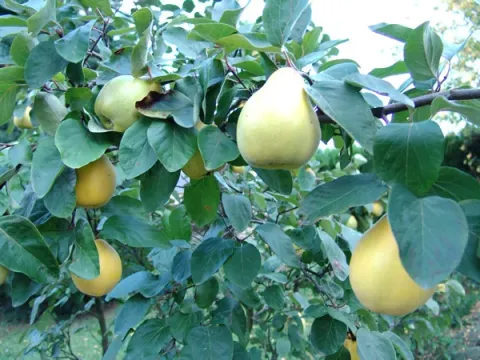
Harvesting typically occurs in late autumn when the fruit transitions from a dull green to a vibrant golden-yellow. At this stage, the fruit is extremely aromatic and easily separated from the branch with a gentle twist.
Avoid harvesting during freezing conditions, as frosted fruit will not store well and quickly loses its culinary value. The fruit must be handled with care to prevent bruising, as the skin is susceptible to minor abrasions that can lead to decay.
Quince is highly valued in the culinary world for its high pectin content, making it an ideal candidate for jams, jellies, and marmalades. Beyond preserves, it is a staple ingredient in savory stews and traditional meat dishes in many cultures.
The medicinal and nutritional properties of quince are well-documented, specifically its use in soothing digestive issues. Its high antioxidant and fiber content make it a healthy addition to a diverse diet.
For storage, maintain a temperature range between 0 and 2°C with high humidity. Properly stored quince serves as a versatile fruit that can be used for processing or fresh consumption well into the winter months.