
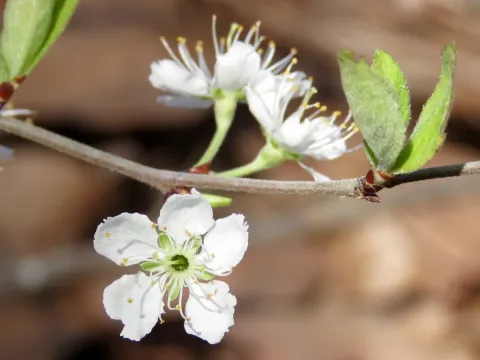
Prunus gracilis
Prunus gracilis
Prunus gracilis, commonly known as the Oklahoma plum, is a deciduous shrub belonging to the Rosaceae family. In its natural habitat, it forms a compact, low-growing shrub, rarely exceeding two meters in height, characterized by its slender and graceful branches.
What the section contains
Prunus gracilis
The native range of this species is primarily concentrated in the United States, specifically across Oklahoma, Kansas, and Arkansas. It is well-adapted to open prairie environments, rocky slopes, and well-lit areas where it can receive consistent full sun.
The plant has moderate soil requirements, thriving best in well-drained loamy or sandy soils with a neutral to slightly acidic pH. It is crucial to ensure good drainage, as the root system is sensitive to waterlogged conditions that can cause rot.
Regarding climate, Prunus gracilis exhibits high resilience to temperature fluctuations typical of continental regions. It is cold-hardy, although in extreme winters, younger branches may experience some dieback if not properly established.
Agricultural management requires consistent pruning to maintain the shrub's shape and promote healthy growth. Due to its naturally compact size, spacing can be closer than with larger fruit trees, which optimizes land use in smaller orchard settings.
Fruiting typically begins 3 to 4 years after planting in a permanent location. Yields are generally modest compared to commercial plum varieties, as the plant is often valued more for its resilience and ornamental traits in home gardens.
The fruits are small drupes, usually measuring between 1.5 and 2 centimeters in diameter. They display colors ranging from bright yellow to deep red, often covered in a characteristic bloom that acts as a natural protective layer.
The flavor profile of the fruit is notably tart and acidic, making them less ideal for raw consumption but excellent for processing. They are highly sought after for creating jams, jellies, and savory culinary sauces.
To maximize yields, cross-pollination is essential; therefore, planting multiple shrubs in the same area is highly recommended. Crop consistency is largely dependent on favorable spring weather, as late frost can damage the blossoms and reduce production.
Harvesting usually takes place in late summer when the fruit is fully colored and yields slightly to pressure. Manual picking is the preferred method to prevent bruising the delicate skin, which is susceptible to mechanical damage during collection.
Common diseases affecting Prunus gracilis include those standard to the Prunus genus, with brown rot (Monilinia) being the most significant threat. This fungal infection can thrive in humid conditions, rapidly destroying developing fruit clusters.
Shot hole disease, caused by the fungus Wilsonomyces carpophilus, is another common concern. It results in dark spots on leaves that eventually drop out, leaving behind small holes that impair the plant's photosynthetic efficiency and overall vigor.
Pest pressures are primarily caused by the plum curculio and various aphid species. The plum curculio larvae burrow into the ripening fruit, while aphids tend to colonize new growth, causing leaf curling and stunted shoot development.
Integrated pest management strategies are advised, starting with diligent sanitation, such as removing fallen leaves and mummified fruit from beneath the bushes. Reducing these overwintering sites is the first line of defense against pathogens.
When chemical intervention is required, it should be applied judiciously, avoiding applications close to the harvest window. Many growers prefer organic or horticultural oil treatments to maintain the health of the plants without compromising fruit safety.